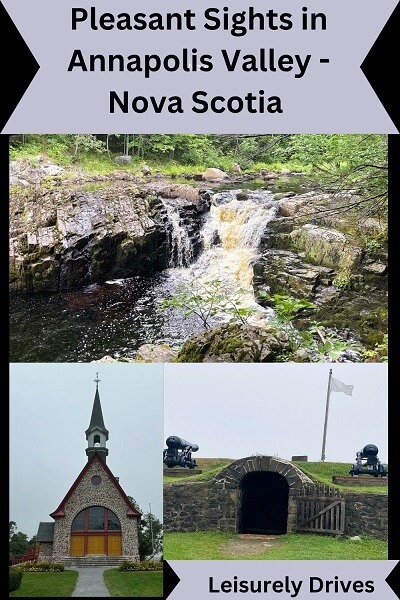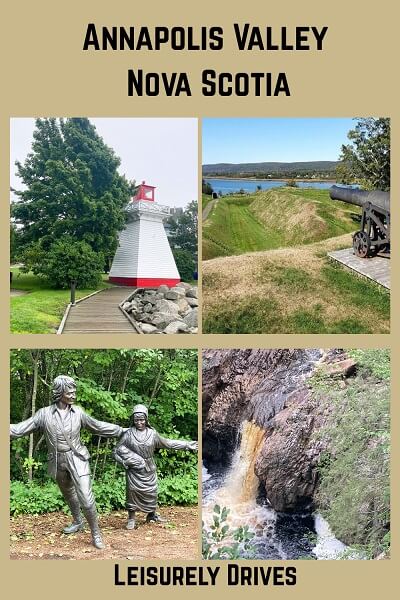
Rich fertile soil, and plenty of water from two rivers – no wonder early settlers picked on the Annapolis Valley to set up their new homes.
This valley, now a major agricultural region, is located in the western part of Nova Scotia, stretching from Annapolis Royal on the Annapolis basin, to Wolfville on Minas Basin, between the north and south mountain ridges.
The valley has extensive apple orchards, a wine industry and a UNESCO world heritage site – the landscape of Grand Pre.
We spent 3 days in this beautiful region and visited a couple of interesting places.
FORT ANNE ROYAL HISTORIC SITE WITH A SCENIC WATERFRONT
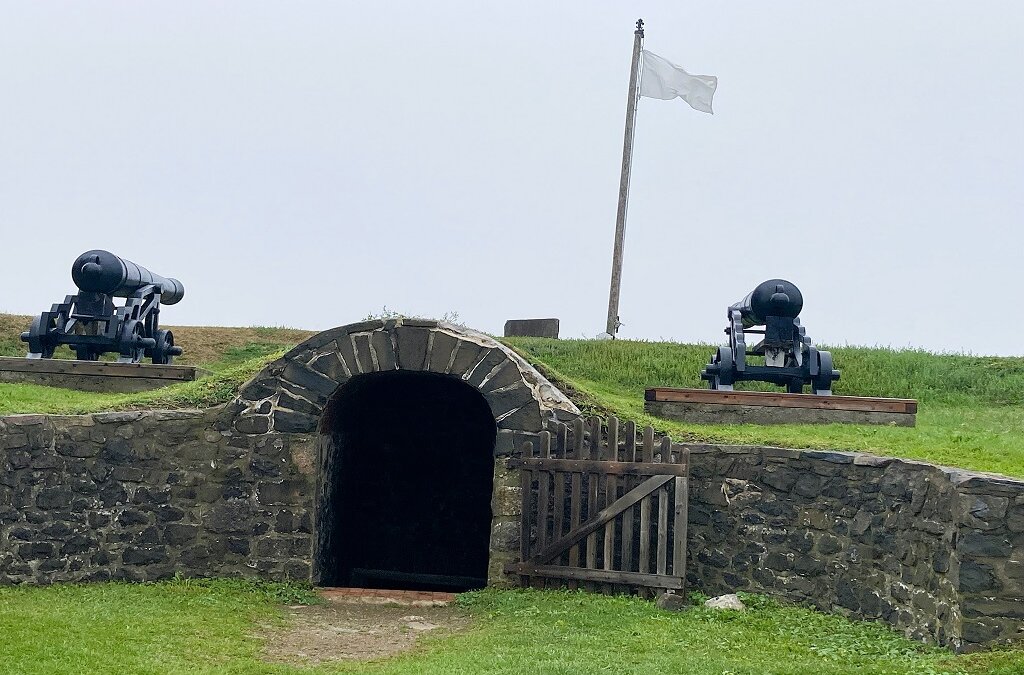
Located in the popular town of Annapolis Royal, Fort Anne National Historic Site has old military fortifications, lots of early Canadian history, a small museum and scenic views of the Annapolis river.
With panoramic views over rolling hills and salt marshes, Fort Anne is located at the confluence of Annapolis and Allain rivers.
It is a great place to explore and learn about the early British and French settlements of Canada. Historians and photographers will find this place interesting. You will also find lots of wide-open green spaces for scenic walks.
Here is a snapshot of bygone years.
1605: Port Royal and the surrounds became a center of Acadian life when French settlers began moving in.
1629 : Settlers from Scotland established their base and fortified the area.
1702-08: A star shaped fort was built here using the military principles laid down by Vauban, the famous French engineer.
1710: British forces changed the name ‘Port Royal’ to ‘Annapolis Royal’ in honor of Queen Anne. This town was the capital of Nova Scotia until Halifax was founded in 1749.
1917: Fort Anne became the first National Historic site in Canada.
Faraway conflicts between France and Britain had their impact on this region, as Fort Anne kept changing hands. The complex history of this area includes many participants – Mi’kmaq, Acadians, British soldiers, Scottish settlers and also African Nova Scotians.
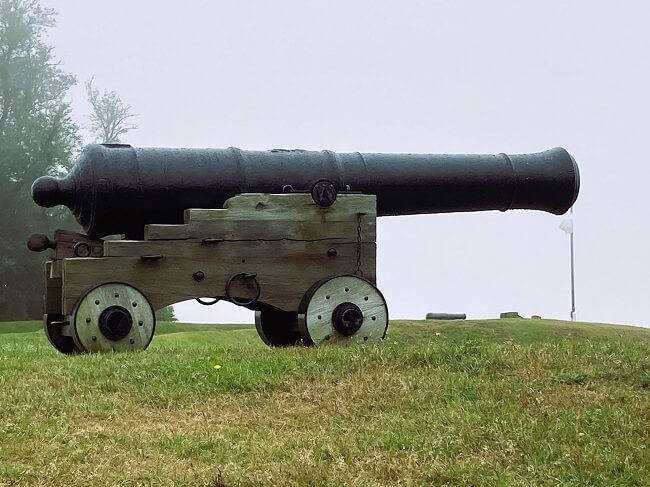
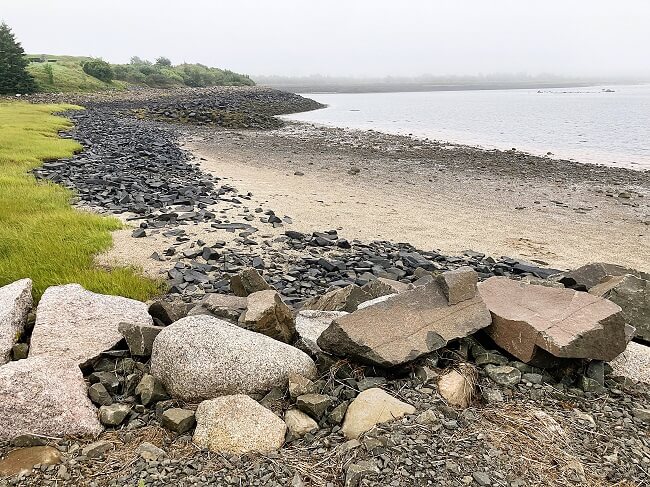
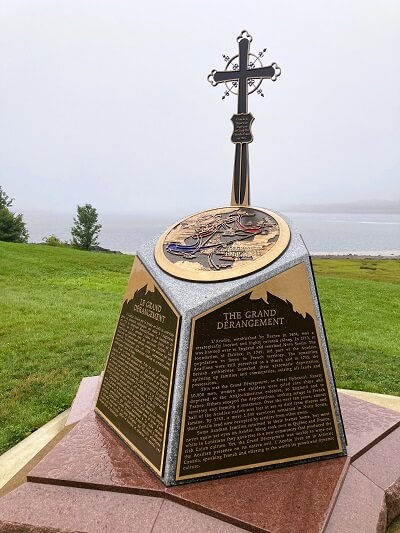
We arrived at Annapolis Royal and found a beautiful waterfront boardwalk. We walked for about 40 minutes on this boardwalk, enjoying the water views. At the end are two big Adirondack chairs facing the water – perfect spots to sit and relax! The views of the Annapolis river and basin were gorgeous!
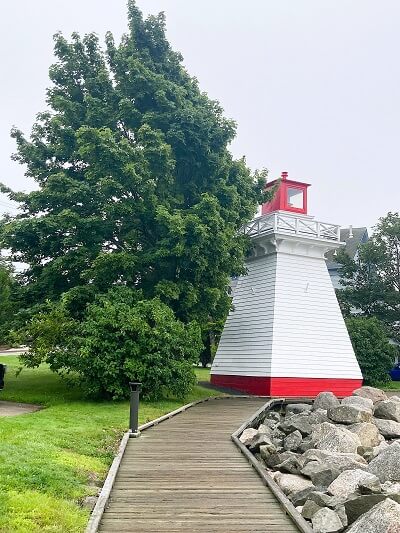
Near the waterfront stands a small white lighthouse with a red trim, called the Annapolis Royal Lighthouse. It signals the end of the navigable waters for vessels on the Annapolis River.
Built in 1889 on the water’s edge on St George street, it was destroyed by fire in 1833 and rebuilt soon afterwards.
The lighthouse is a white wooden tower about 8.5 meters tall, with a red lantern room and a fixed light.
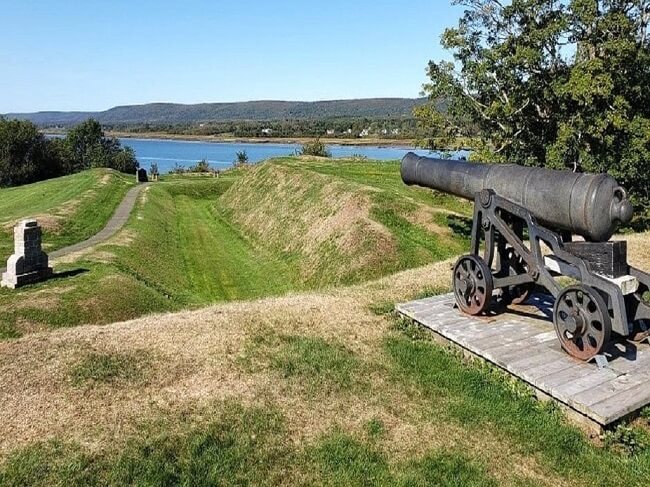
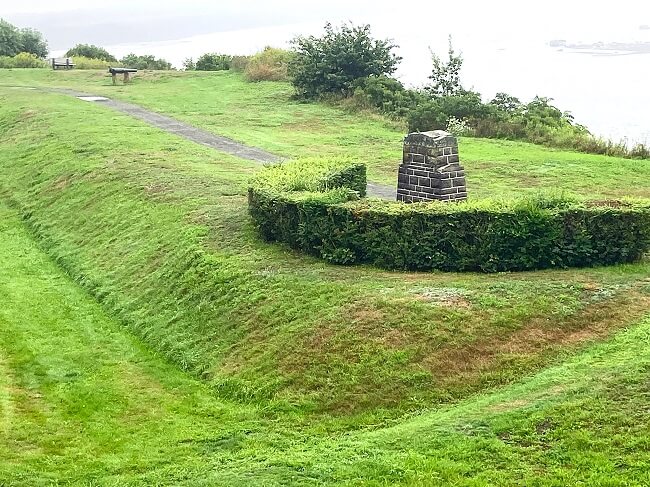
After admiring the lighthouse, we walked to the 1702 Vauban-style star fort itself. We found a gravel and grass path, somewhat uneven, that runs for a kilometer around the fort. There were steep stairs here and there due to steep slopes.
It was interesting to explore the grassy earthwork walls of the old French fortifications. The interpretive panels were helpful in understanding the history and background of the designs.
We found a historic powder magazine, dating back to 1708, that was interesting.
MCMASTER FALLS
Also known as Rockville Notch falls, McMaster falls is a lovely small waterfall in Annapolis valley, near Greenwood in Kings County.
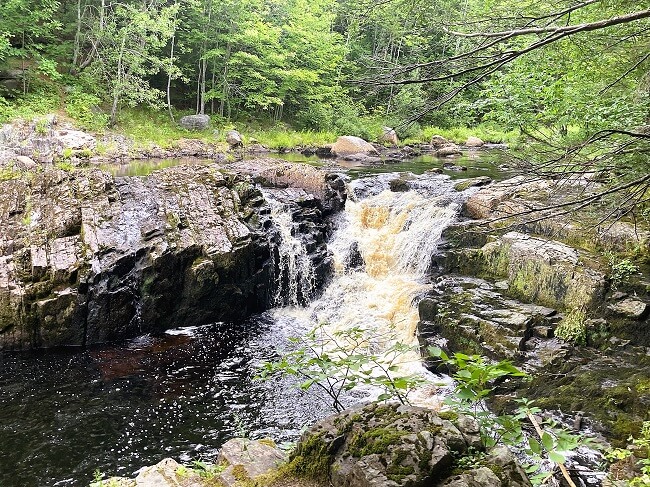
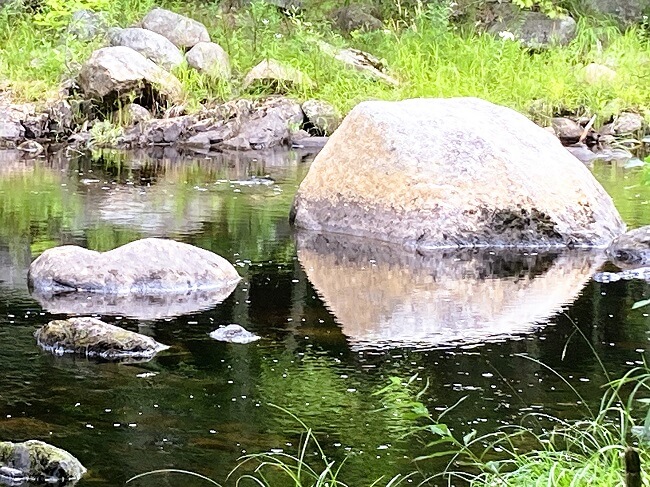
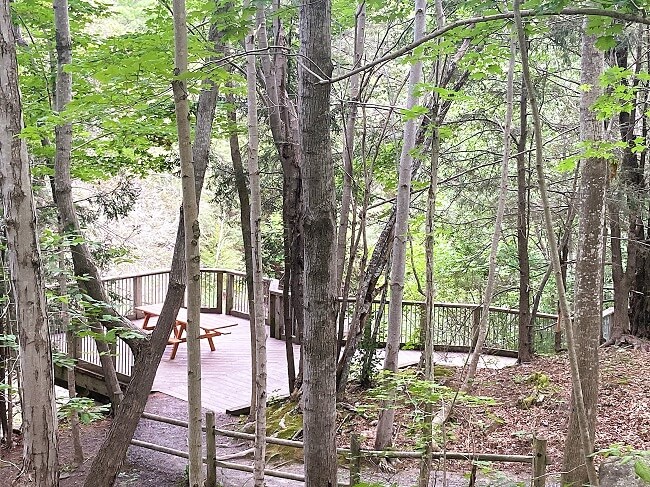
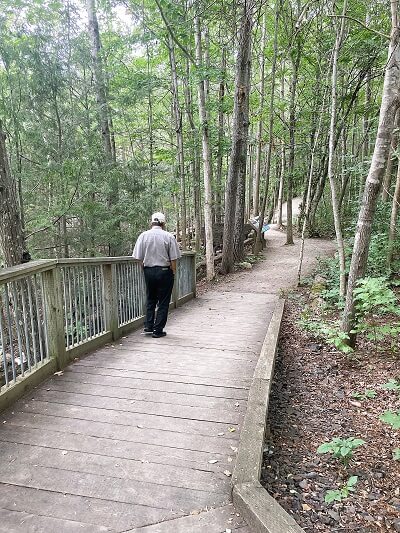
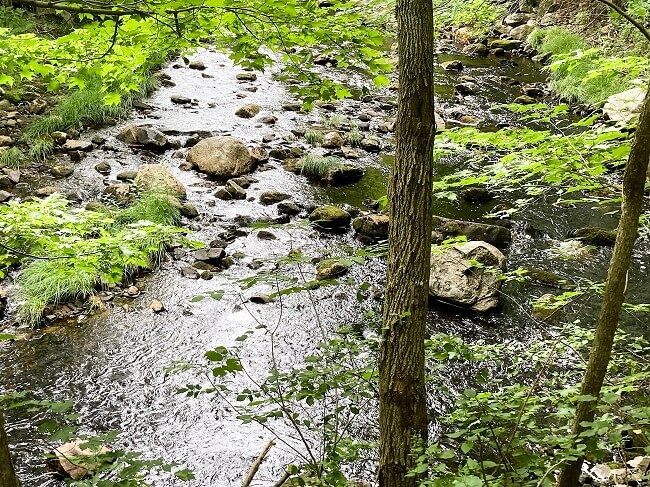
There were some easy walking trails leading through the McMaster Mill historic park and we could view the falls from many angles.
We were surprised to see some remnants of an old mill and dam. There were interpretive signs indicating the logging and settlement history of the place.
A convenient viewing platform helped us get a good view of the falls, and take pictures of the falls and the gorge . It took about 45 minutes to walk the easy trails, while enjoying the views.
Waterfalls and Rapids: There were many cascades flowing through the rocky gorge along the Fales River.
GRAND PRÉ NATIONAL HISTORIC SITE
Another highlight of this valley is Grand Pré– famous for Acadian History and a UNESCO world heritage landscape. It is a beautiful and historically important place in Annapolis valley.
It is closely associated with early Acadian settlement and the 1755 deportation of the Acadians. It lies in the heart of the Unesco listed landscape of Grand Pré, which is also known for its peaceful parks and great countryside views.
Once again, there is a lot here for a history lover to learn and experience, and plenty to photograph too.
The name ‘Grand Pré means ‘large meadow’ in French – based on its surrounding landscape with marshlands and farm fields.
A bit of Acadian history
– Acadians established Grand Pré around the 1680s. They transformed tidal salt marshes into productive farmland using a network of dykes, drainage channels and aboiteaux.
– Around the early 18th century, the surrounding Les Mines district became the largest Acadian population center with Grand Pré as its largest settlement
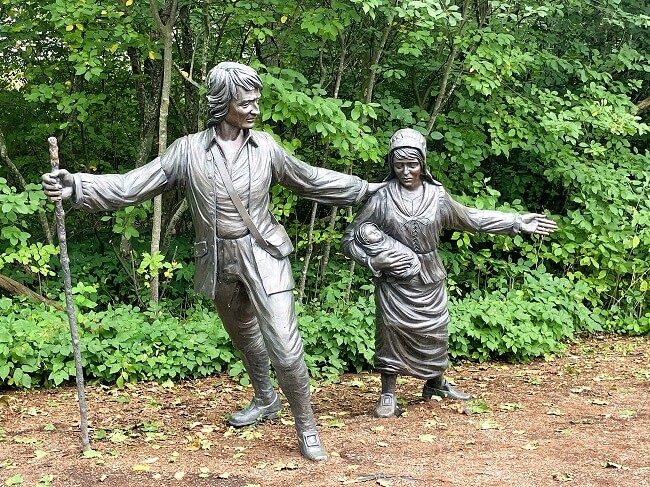
– The Deportation or Grand derangement (uprooting) : In 1755, after the Acadians refused to swear an unconditional oath of allegiance to Britain, around 2,200 Acadians from Les Mines were forcibly deported to distant places.
This led to Grand Pré becoming a powerful symbol of displacement, survival and Acadian identity.
Things to see and do in Grand Pré
– At the Visitor Information Centre, watch the 22-minute multimedia film “The Grand Dérangement” inside a theater designed like a ship’s hull. The film will tell you about the tragic 1755 Acadian deportation.
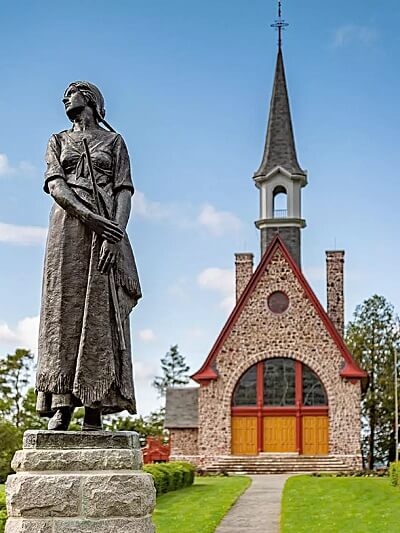
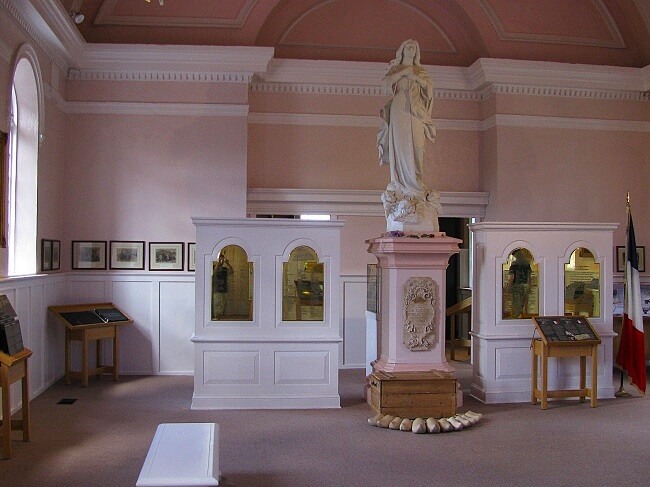
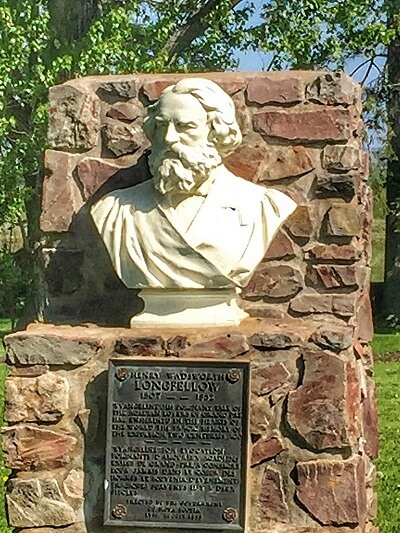
– Visit the commemorative buildings including stone Memorial Church (erected in 1922), see the iconic statue of Evangeline – a fictional Acadian heroine (heroine of Henry Wadsworth Longfellow’s poem), and view the Longfellow memorial bust.
– Stroll through 14 acres of manicured Victorian gardens, walking paths, and historic artifacts
– Stop at the Old Post Road viewpoint, or visit Horton Landing, the departure point where Acadians were shipped off during the deportation.
– Visit one of the eight oTENTiks – a mix between a tent and a rustic cabin (located in an open field) for those who want to camp – and decide whether you want to stay there overnight while immersing yourself in the history.
– Visit the gift shop and spend time at the picnic tables
The huge landscape in the site, covering about 1300 hectares, includes dykes, farmland, marshes and settlements. These were shaped by the Acadians first, then by New England planters. It was given the title of Grand Pré World Heritage site in 2012.
After spending 3 nights in Annapolis Valley, we headed northwest towards New Brunswick and PEI for more adventure.