
People choose their travel destinations based on their interests. Some love to explore history, architecture and culture. Others want some adventure like challenging hikes, climbs, trails and views.
Some simply want to be just there in that place.
Gangtey valley is such a place, where you will find serenity in nature – amidst black necked cranes, wild yaks, meadows, miles of potato fields, and nature trails.
Gangtey valley is located in the center of Bhutan, about a 4 hour drive (168 km) from Paro International Airport and about a 2 hour drive (81 kms) from Punakha valley.
GANGTEY VALLEY AND GANGTEY TOWN
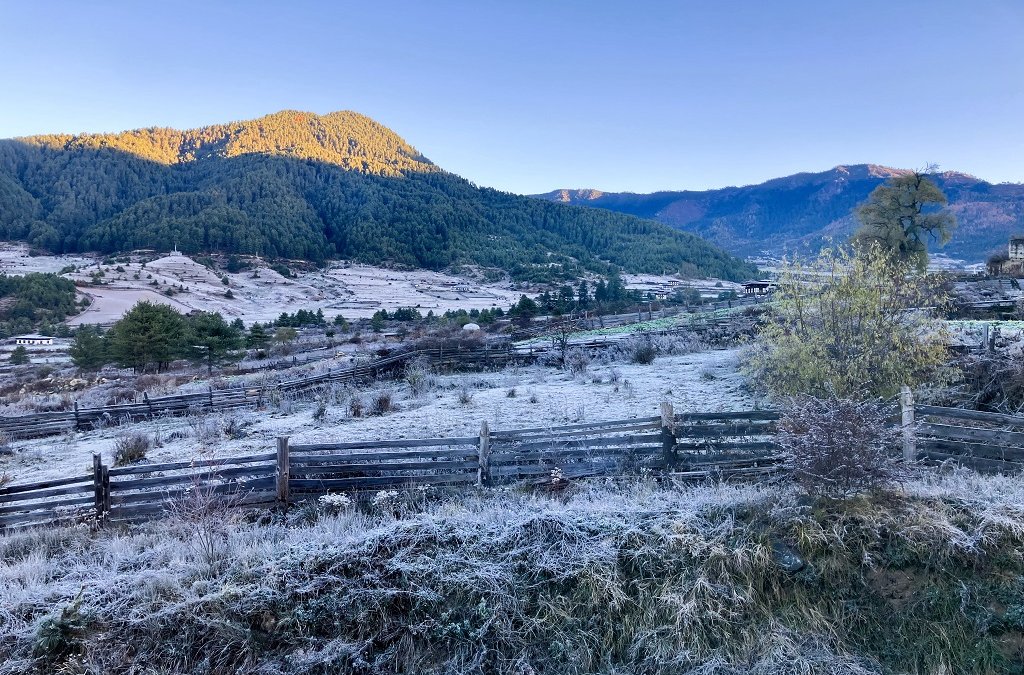
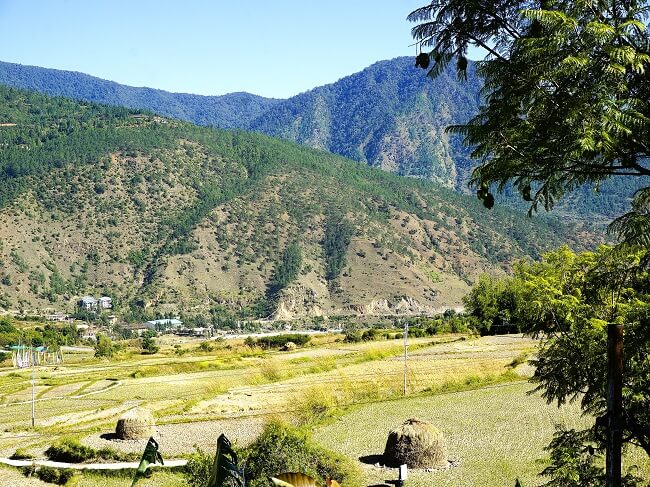
A town of peaceful monasteries and interesting wildlife, Gangtey is nestled in a glacial valley with the backdrop of Black mountains. The valley looks awesome around the end of fall with ‘hoar frost’ (almost like a sheet of snow) spread across the landscape, gradually melting away when the first rays of sunshine fall on it.
PHOBJIKHA VALLEY
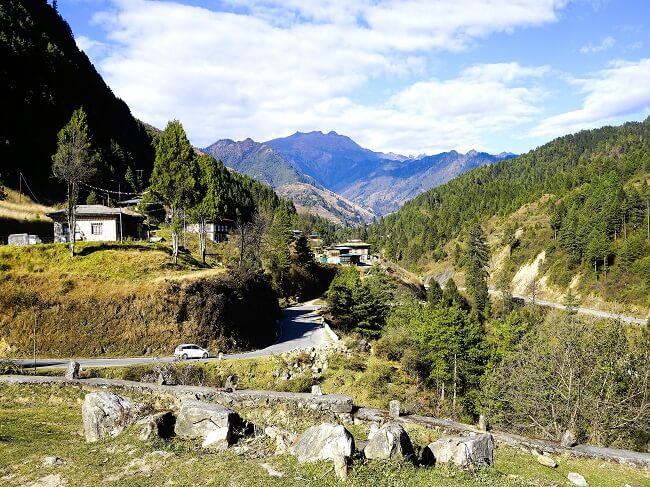
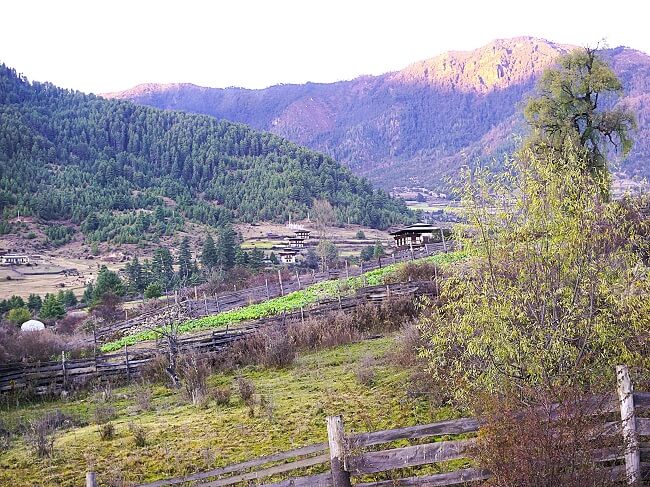
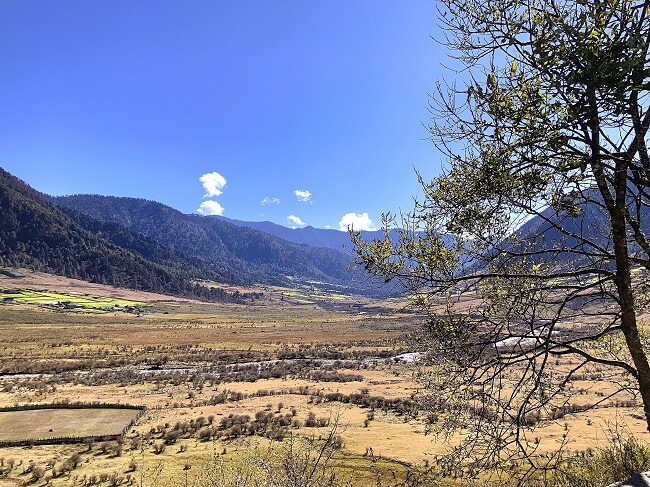
Phobjikha Valley, a part of the Gangtey valley, is at an altitude of about 3000 m. It has a beautiful landscape and is surrounded by verdant forests, rolling hills and pretty villages.
This valley is special amongst all the various valleys in Bhutan, because it has ecological significance, due to which it has been designated as a conservation area.
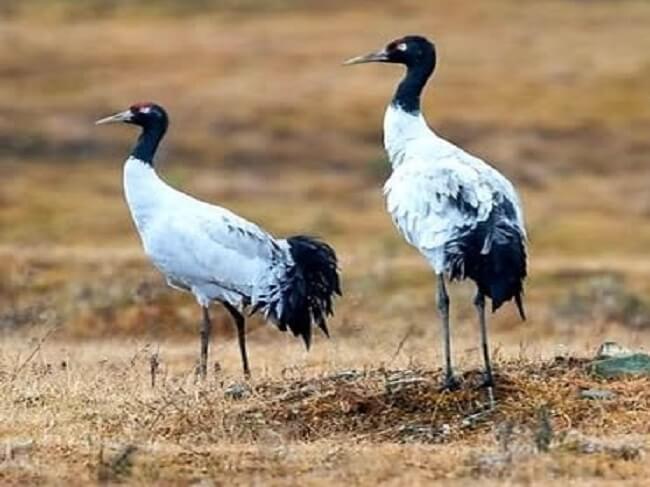
It is the winter home to the endangered, black-necked cranes. These cranes migrate to Phobjikha Valley from the Tibetan plateau between the months of October and early February. This makes the valley attractive to birdwatchers, visitors and nature enthusiasts.
There are lots of things to see and do here for wanderlust travelers, backpackers and nature lovers.
Must-See Sights
BLACK-NECKED CRANE CENTER IN PHOBJIKHA VALLEY
The top thing to do here is visit the black necked crane centre and see the nesting and breeding grounds of this reclusive species.
The cranes visit Gangtey from November to March each year. One unusual feature of these cranes is that they circle the air three times before taking off. Locals believe that this is the cranes’ way of demonstrating gratitude for the food and shelter received during their seasonal stay in Bhutan. The arrival of the cranes is celebrated by the local community via the annual festival held at the Gangtey Monastery.
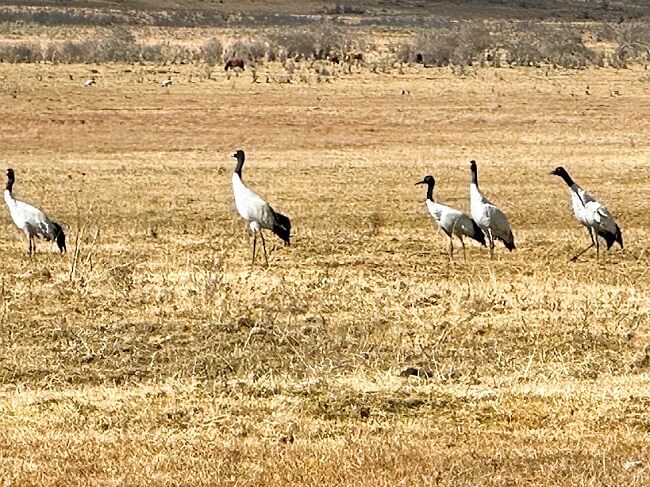
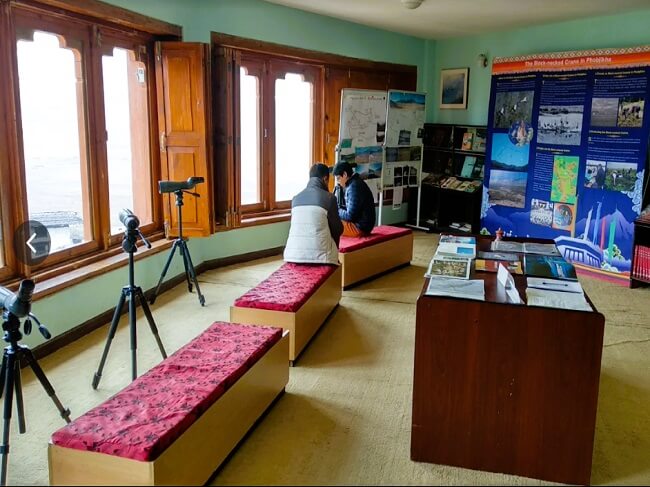
The black necked crane center (part of Royal Society for Protection of Nature (RSPN)) has displays, exhibits, running movies and a ton of information about these exotic birds. Alongside, there are observation centres that offer undisturbed views of the surrounding valleys that are often visited by these birds. The visitors are not allowed to go near the birds but can view them close and observe their behavior through powerful telescopes.
Visitors are allowed to walk along a certain path on the valley, close and yet not too close to where the cranes gather, and observe them through binoculars. We enjoyed our long walks and got some great views. The weather was quite pleasant in November when we visited.
YAKS
Yaks in the Gangtey (Phobjikha) valley of Bhutan are an important central part of the local ecosystem and culture.
Yaks are heavily built animals with bulky frames, strong legs, rounded hooves, and very dense, long fur hanging lower than the belly. Yaks have trouble thriving at lower elevations and are prone to suffering from heat exhaustion above about 15 °C (59 °F). Nature has adapted their bodies to live in cold climates with a thick layer of subcutaneous fat and almost no functional sweat glands!
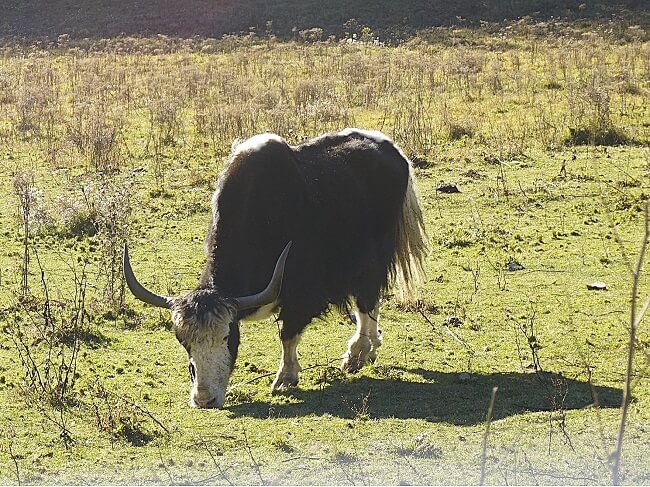
There are the wild yaks and domesticated ones. The domesticated, thick-furred bovids are brought down to the valley by herdsmen (Brokpas) from altitudes of above 9,800 feet. Yaks are primarily used in Bhutan and (Tibet and Sikkim) for milk, meat, wool, and transport.
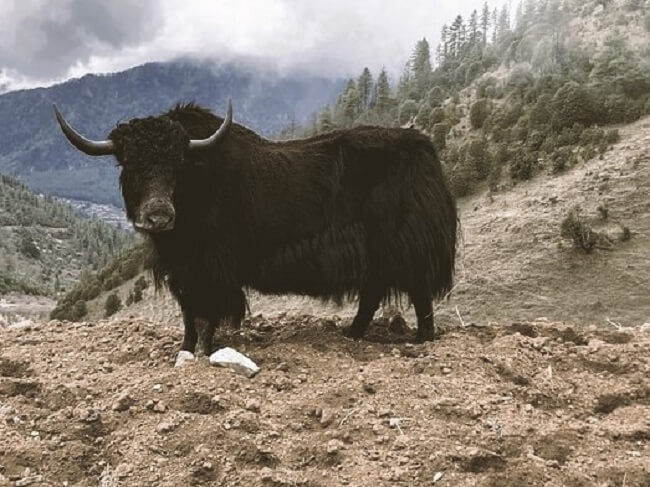
We saw some yaks grazing in the valley. They are domesticated and do not attack. Many tourists pose next to yaks and take photos.
GANGTEY POPULAR FOOD DELICACIES
Some yak meat delicacies here include yak steak, Yaksha Shakam (dried meat with cheese), smoked and dried yak meat (Kuru) (similar to jerky but often made with chili and radish), and several spicy stews and curries eaten with the local high fibre red-rice. Another interesting food item is yak cheese (Chhurpi) made from yak milk, smoked and chewed as a snack.
In addition, local specialities include stuffed yak meat and potatoes in dumplings and momos.
NATURE TRAILS
1) Gangtey Nature trail
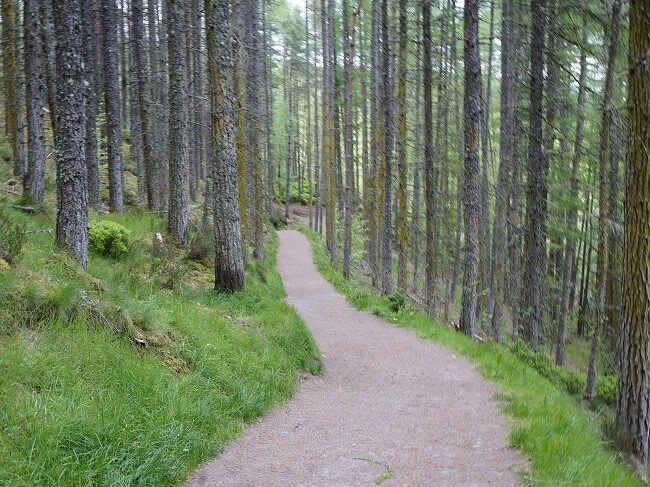
Visitors can walk along the Gangtey Nature Trail into the valley forest and get a chance to see black-necked cranes from a distance during their migration season.
The walk takes you to a hilltop from where you can enjoy magical views of the entire valley. The trails are fairly easy to ascend and hike through, and any fit traveler can do this hike.
The downhill trails pass through flowery meadows and remote villages adding more beauty and adventure to the hike. The 5.5 km, mostly downhill, trail starts from Gangtey monastery and takes about 2 hours to reach Khewa Lhakhang in the valley floor.
Difficulty Level: Easy ; Total Distance: 5.5km (approx.)
2) Longtey Hike
This is a rather more peaceful alternative and it takes the forest path of rhododendron and pretty villages in the valley.
First, there is a half hour drive from Phobjikha to the start point in the Longtey village. There is a descent, via a bushy route, to a group of houses in the village. The valley walk is particularly beautiful because the path is flanked by colorful rhododendron forests on both sides. You may see a yak or two on the way. After that comes a steep ascent, which might be a bit challenging. You will soon get awesome views of Gangtey Goempa and other structures like the Shedra below. You can opt to walk back or get picked up from this point.
Difficulty Level: Moderate; Walking time: 4 hr; Attraction: Longtey village & Kumbu village
3) Phubja Trek
This is a rather strenuous trek and takes about 3 days and would interest ecotourism seekers.
VISIT THE IMPOSING GANGTEY MONASTERY
Perched on top of a small hill that overlooks almost the entire Phobjikha Valley, the spectacular Gangtey Monastery is unmissable. It is surrounded by a large village with families of the 140 gomchens who take care of the monastery.
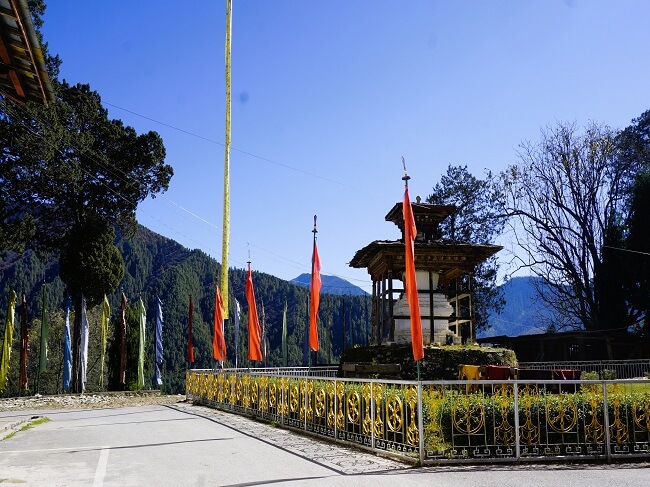
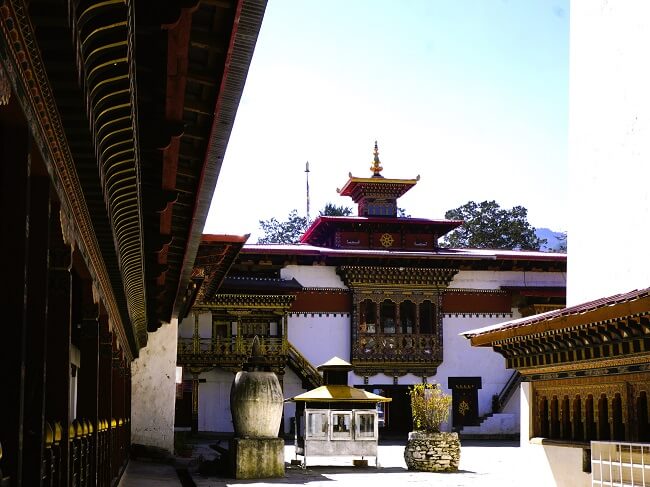
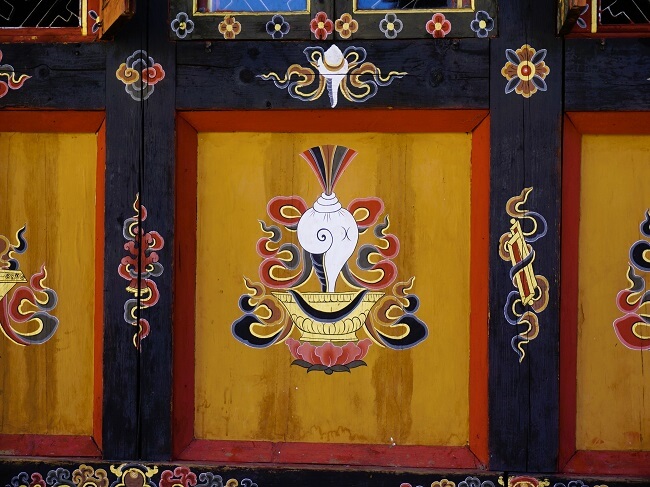
Built in 1613, the monastery is home to 100-odd monks, and features one of the largest prayer halls in all of Bhutan.
As you approach the monastery, you enter an imposing central courtyard. The right side has been fully restored and its rich colours look impressive. The left side is currently unrestored. The main temple is built in Tibetan style.
TEST YOUR ARCHERY SKILLS
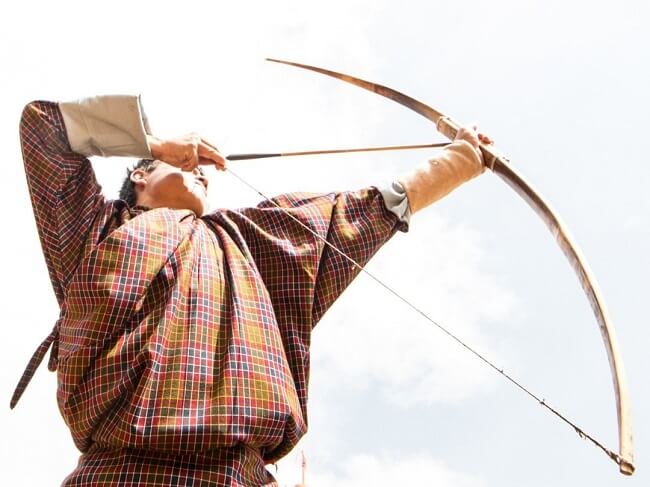
Archery is one of Bhutan’s national sport, and you can try your skill in many locations, including Gangtey. In fact, almost every household here has a traditional bow and arrow, and this sport is loved and practised.
Many tourists take part in this interesting activity and there are often teams and cheering involved making them fun events.
DOTSHO – ENJOY A TRADITIONAL STONE BATH
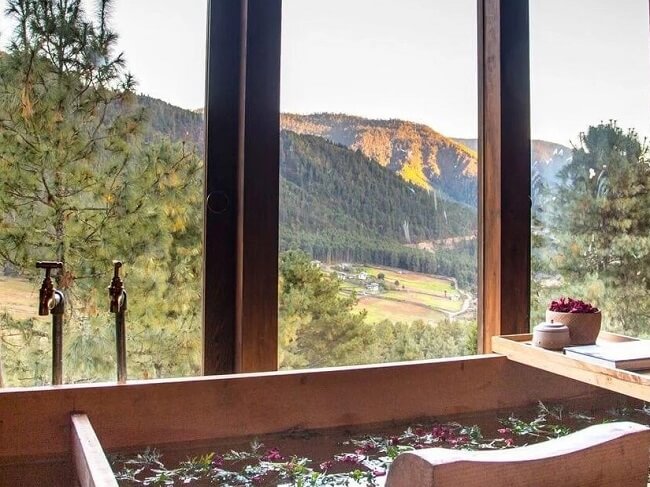
A speciality of Gangtey region is Dotsho – a traditional stone bath – which is relaxation at its best. It is one of the must-try things to do in Phobjikha Valley and popular as a medicinal practice among the locals.
A Dotsho stone bath involves soaking in a wooden tub filled with water. River stones are first heated in a fire and then put in the water to make it slightly warm. The tubs are made from oak and local medicinal herbs and plants like Artemesia leaves are put in the tubs to relieve joint pains. The tubs are usually placed next to tall windows so that you can enjoy views of the valley during the bath. The aim is to calm the mind and promote relaxation.
ACCOMMODATION IN GANGTEY
Apart from hotels – both luxurious and budget, Gangtey offers a number of authentic traditional ‘Home stays’ mostly with spectacular mountain and valley views. Many homestays offer spa services and archery practice grounds.
As Gangtey valley is cold most of the year, the hotels offer heated rooms. Also, there are literally no TVs at the hotels! This fits with the immersive cultural experience they offer. The guests are encouraged de-stress and relax in the mountain lifestyle.
The Gangtey-Phobjikha valley is often referred to as the ‘Switzerland of Bhutan’ and attracts international tourists especially those interested in hiking, camping and birding or just relaxing!
After enjoying 3 wonderful days in Gangtey, we moved on further eastwards towards Trongso and Bumthang for more adventures.
Gangtey valley looks absolutely beautiful, I’d love to visit it one day and see the animals 🙂
Gangtey Valley sounds like such a peaceful and untouched place—exactly the kind of destination where you can truly slow down and connect with nature. The landscapes of Phobjikha Valley and the chance to see black-necked cranes in their natural habitat make it even more special. I love that it’s not just about sightseeing, but about experiencing the quiet beauty and wildlife. Bhutan keeps moving higher on my travel list after reading this!
This is my kind of content! I am the all of the above type traveler you’ve mentioned. I love the challenging treks and big views, but I also love just being outside on a patio or even in the middle of no where except the birds (and yaks) to just be still. I really enjoyed this, thank you!
I’d love to photograph and observe the black-necked cranes! The hike is also of interest of me, it looks peaceful with great views.
The wildlife in the Gangtey Valley looks amazing–I’d love to see the black necked cranes in their natural environment and the yaks.
The Gangtey Valley is gorgeous, and seeing animals in the wild always makes me happy.
I have heard such great things about Bhutan lately! I am dying to explore!
This looks fantastic – and exactly how I’d love to find serenity in nature – wildlife, hikes, and a stone bath – YES! Beautiful photos.
Gangtey Valley looks amazing – a bit of everything for every traveller.
Bhutan looks like such a magical place to visit, I’d love to go one day!
We definitely plan our travels to offer great outdoor sights. Gangtey Valley looks like a great choice! I would not want to miss the chance to see a yak. And hubby and I would love to try the local foods to fuel us up for a few of these great nature trails. A lovely stop if we ever get to Bhutan.