
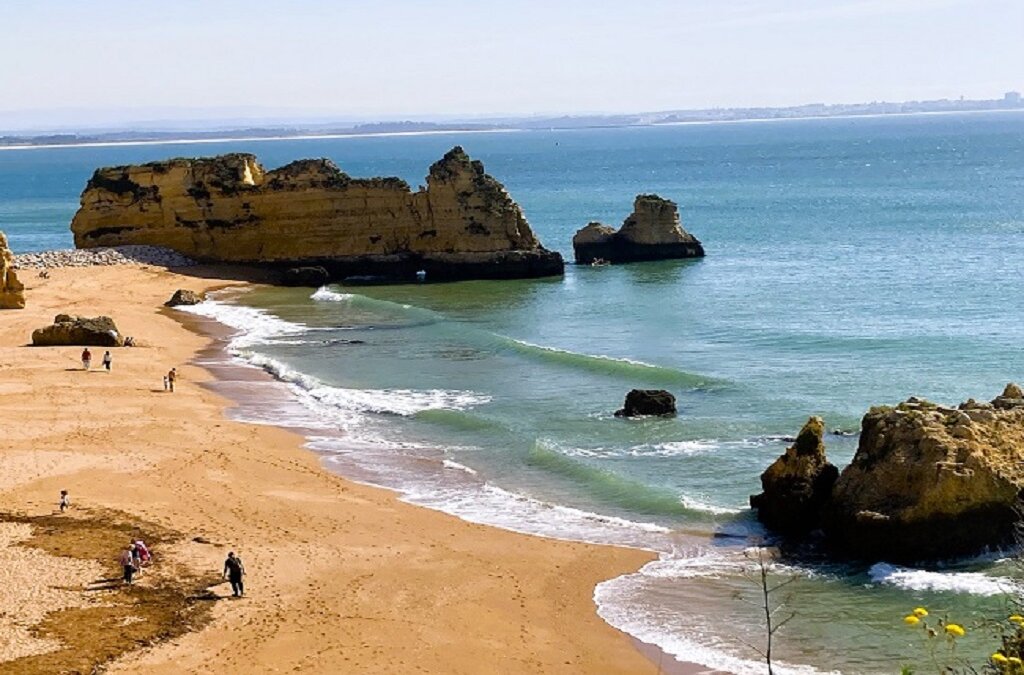
A coastline with over a hundred beaches, plus dramatic limestone cliffs, picturesque sea caves, whitewashed villages and fresh seafood – this is what the southern coast of Portugal has in store for you.
This region of Portugal, called the Algarve, offers you a wide choice of spots where you can set up your base for looking around and enjoying the beaches. We chose the town of Armacao de Pera, very close to Albufeira, and spent 3 days exploring the southern coast, taking day trips to the east and west.
Here’s a map showing our driving route.

PRAIA DONA ANA
Located in Lagos, a short 40-minute drive from Armeca de Pera, is the picturesque Praia Dona Ana.
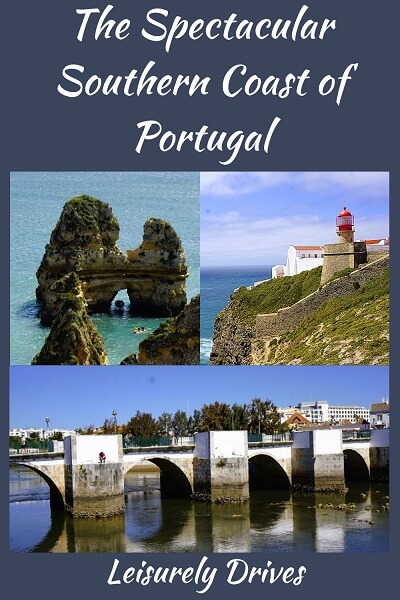
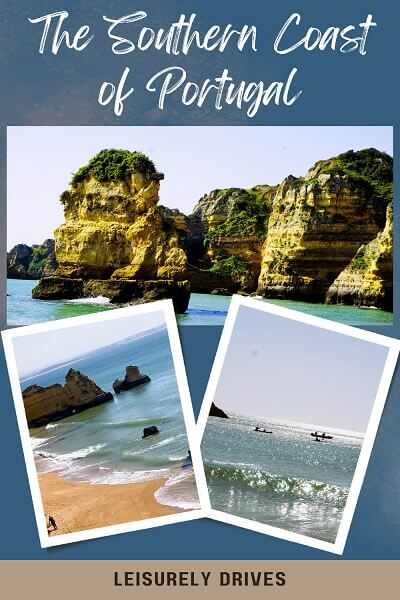
Apart from lovely beaches, Praia Dona Ana has impressive cliffs and sea stacks, with colorful rock formations especially attractive at low tide. There is a particular giant stack just at the point where you get down the wooden stairs to get to the beach.
This beach is named after Dona Ana, a nun living in a convent in Lagos, who survived an attack during World War I using a tunnel that led to the beach!
We walked down the stairs towards the stacks, admired the colors and took some photos. The sun actually changes the colors from shades of golden brown to orange! We enjoyed the long walk along the beach which was fairly busy with several tourists.
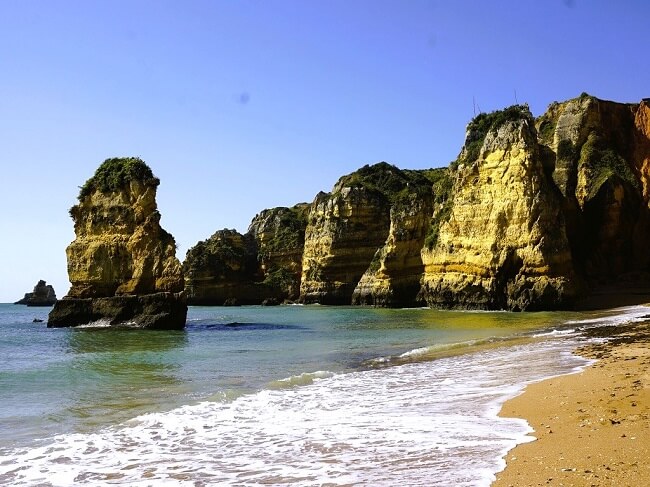
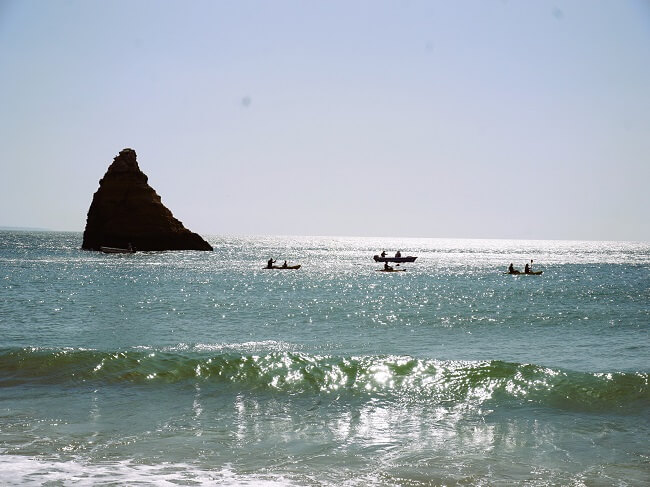
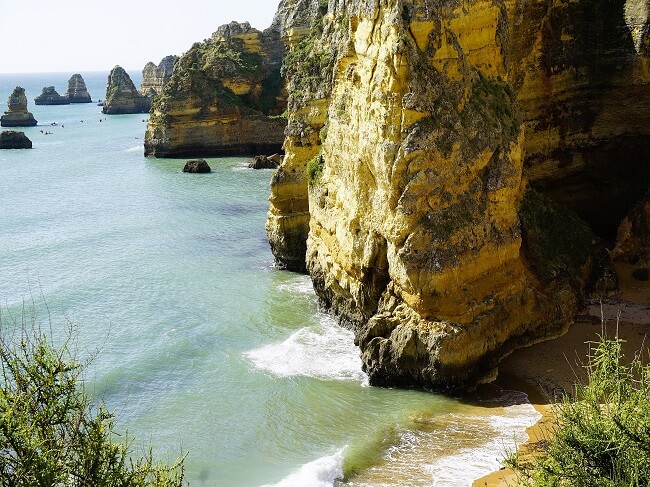
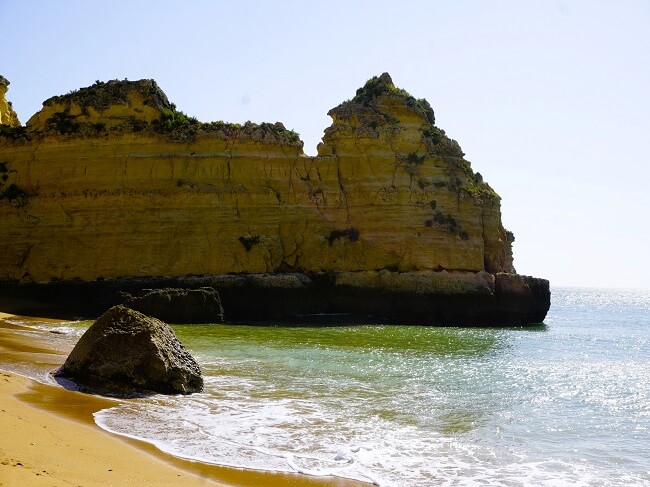
We found it impressive that there is a convenient boardwalk built along the coast from Praia Dona Ana to the next beach attraction, Ponta Da Piedade. However, if you park at Dona Ana, you need to walk back to get to your car. The total walk to and fro is roughly 5 kilometres (3.2 miles) and takes about 2 hours.
We walked about half-way to enjoy the coastal views and then got back to the car to get to the next place.
PONTA DA PIEDADE
Another great beach and more dramatic cliffs, pillars and arches!
The unique feature of the cliffs here is the grotto! Yes, a lovely grotto formed by nature adorns Ponta Da Piedade. There are boats going closer to the rocks and under the grotto through the gap. The views were truly amazing! It is impressive to see how the storms and wind have chiselled these rocks.
We got down the stairs to the beach and took a long walk for an hour stopping now and then to admire the views and take pictures.
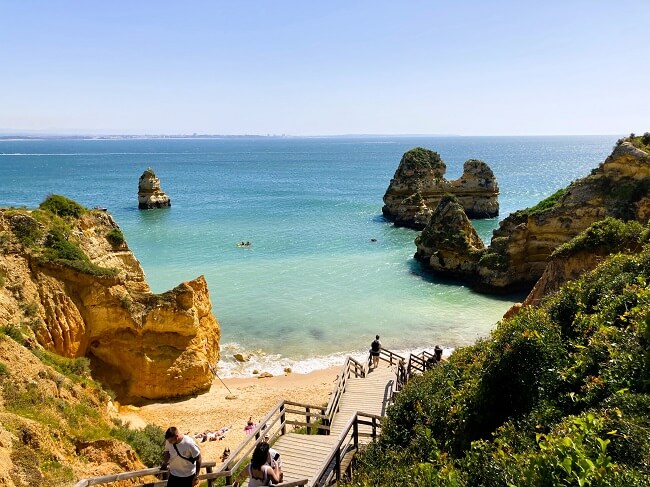
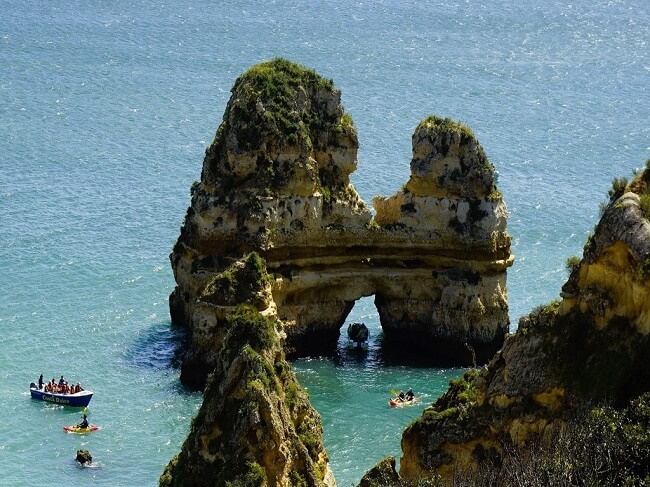
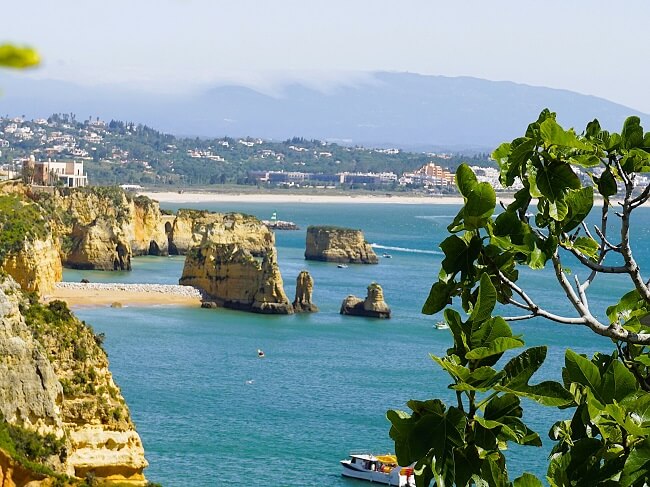
Ponta da Piedade is considered the best attraction in Algarve!
TAVIRA
Tavira is a charming fishing village located alongside the Gilao River. It is about an hour’s drive eastward from Armacao Pera and Albufeira. It is also just about 30 kms from the border of Spain with River Guadiana separating the two countries.
Tavira has both Portuguese heritage and Moorish influence. It has traditional old houses, churches, narrow sloping cobblestone streets and also some historic structures from the town’s defences.
Parking, as with many towns in Algarve, is a challenge! We were lucky to find one spot near the bridge of discoveries next to the Gilao river.
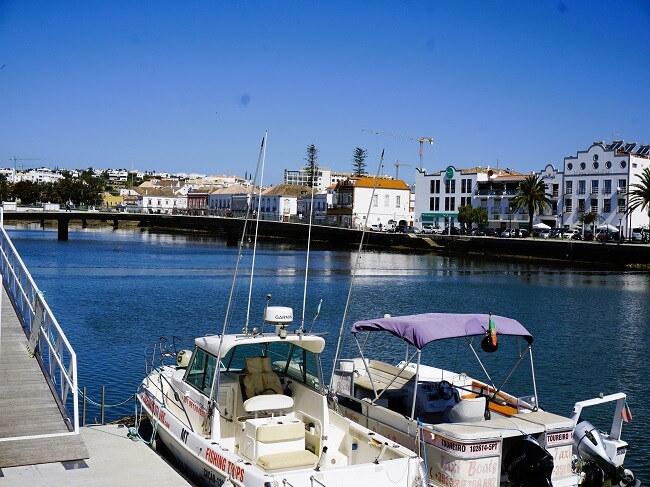
We walked on the path along the river and stopped to admire the boats by Porto de Pesca. A bit further ahead was the Ferry Ilha de Tavira – a place where beach-loving tourists board the ferries. Then came the interesting markets (covered by white canvas shamianas) called Mercado de Ribeiria. Loads of eclectic wares were sold here including handicrafts, jewelry, post cards, clothes and of course, yummy food.
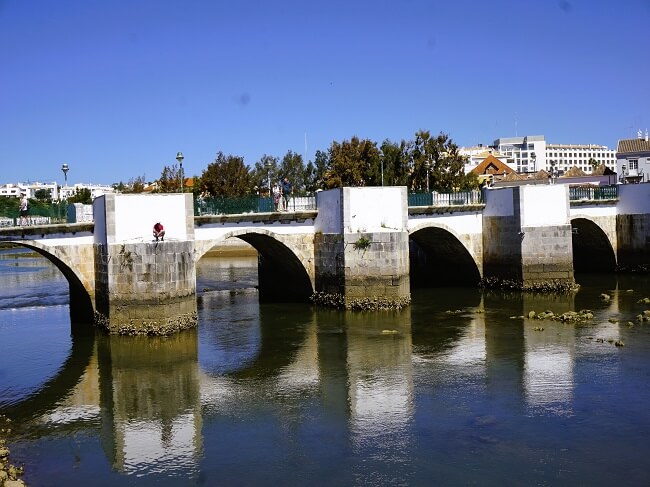
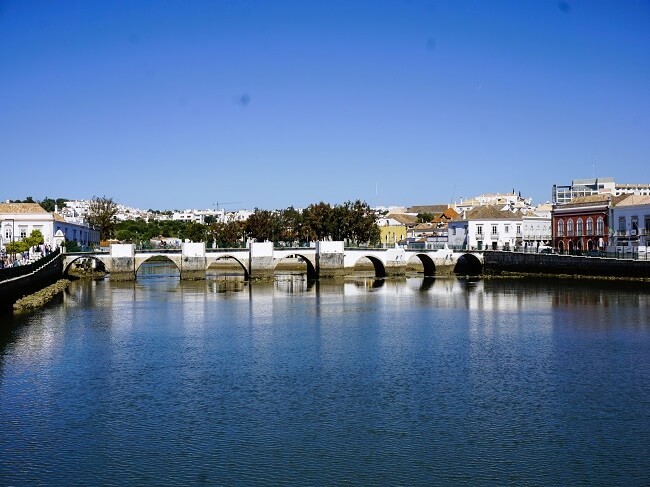
Ponte Romano – the old Roman Bridge
This interesting Roman bridge has seven arches, a cobbled path and rails made of wrought iron. The presence of love locks on the rails reminded us of the bridges in Aveiro with love locks and ribbons of friendship.
The bridge linked the Roman road from Castro Marim to Tavira. The unique feature of this bridge is that it is car-free and accessible to pedestrians. You can get some good views from the bridge – riverbanks flanked by palms and part of the city’s tall buildings.
Historically, Tavira town was founded in 400 BC and served in the trade between North Africa and Europe.
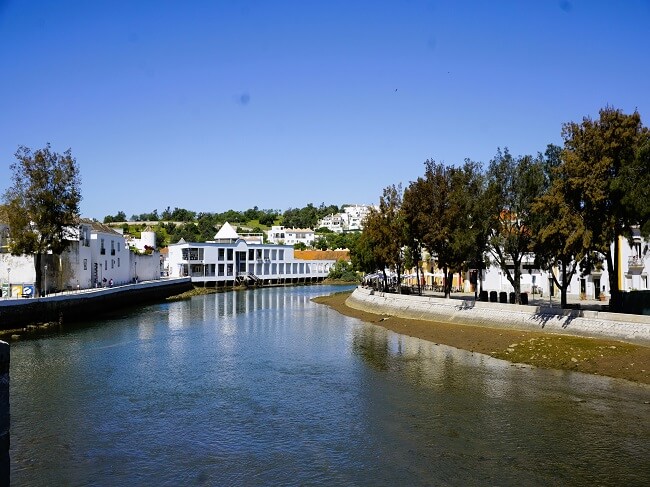
The Central Square of Tavira
There are traditional buildings and a couple of churches in the central square. This place was quite busy with tourists when we visited. There are a number of good eating places and shops.
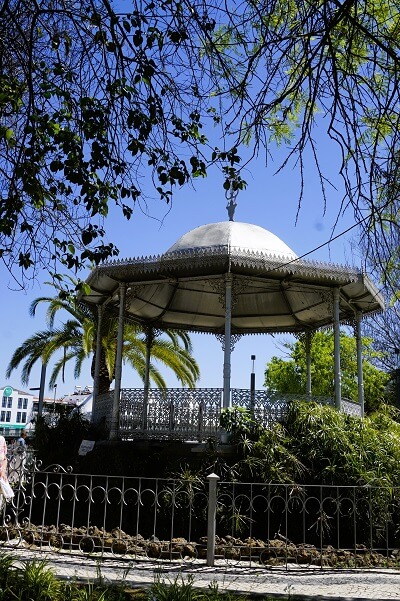
Jardim do Coreto
Close to the central square and along the beginning of the riverside path is the Jadim Do Coreto – a pretty green area with a gazebo and tall trees. This is a good place to stop and admire the riverside views while taking a break from the scorching afternoon sun!
Tavira is a good day-trip from anywhere in Algarve and we spent almost a whole day here.
SAGRES
Driving westward for about an hour from Albufeira and at the southwestern tip of Portugal is the village of Sagres. It has some of the region’s dramatic views and an end-of-the-world feeling as it is located at the southern tip of Portugal.
Some history and beliefs:
For many, many years, the Greeks and Romans believed that this place is sacred and associated it with Hercules.
It was believed that the area called the Promontorium Sacrum was a sacred place. This is where the sun sank from the sky into the ocean and marked this place as the edge of the world!
Talking about ‘edge of the world’ – we visited one awesome place, called by the same name, in NorthWest Tasmania. Basically, these are places that are at the tip of the land at the edge of the sea and the closest land next to it is very far away! In Tasmania the faraway land is – Africa (across the south Atlantic and Indian Ocean); in Sagres, it is ‘the Americas’ (across the North Atlantic).
Two must-see places in Sagres include:
Farol do Cabo de São Vicente
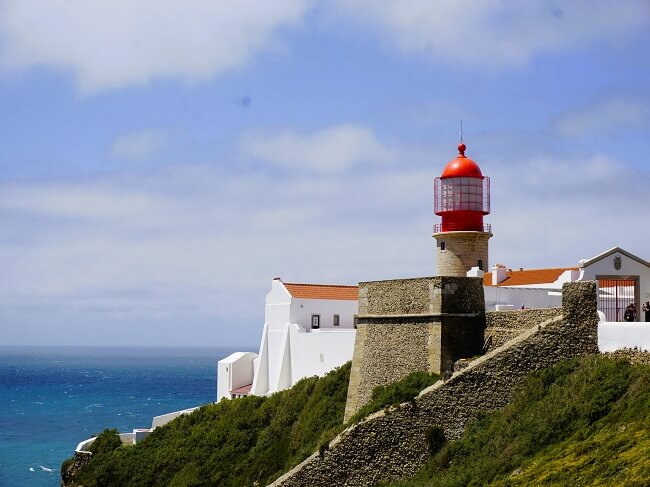
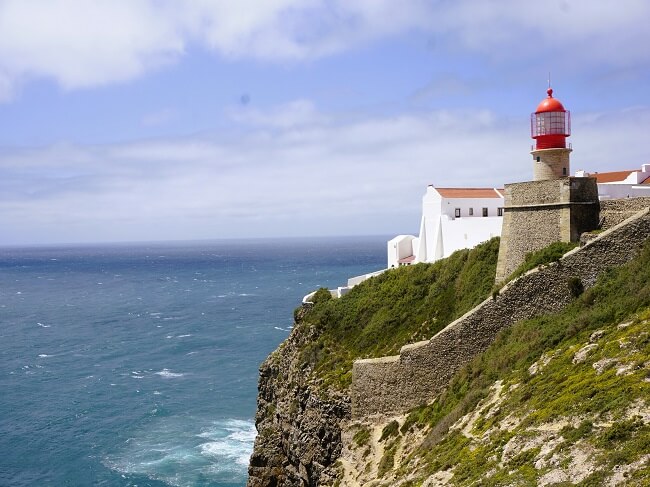
This is Cape Saint Vincent and it also has a lighthouse. It is about 6 kms outside the village of Sagres. It is said to be the most southwesterly point in continental Europe. The dramatic cliffs here rise about 75 metres above the sea and the views are awesome. It was very windy when we visited and was uncomfortable to stand there for long. It is not safe to walk close to the edge as it may have loose rocks.
The Lighthouse clinging to the side of the rugged cliffs is a sight to see! The lighthouse is still in operation, so tourists are not allowed inside.
If you stay overnight in Sagres, it is worth staying on to view sunset from here.
Fortaleza do Beliche
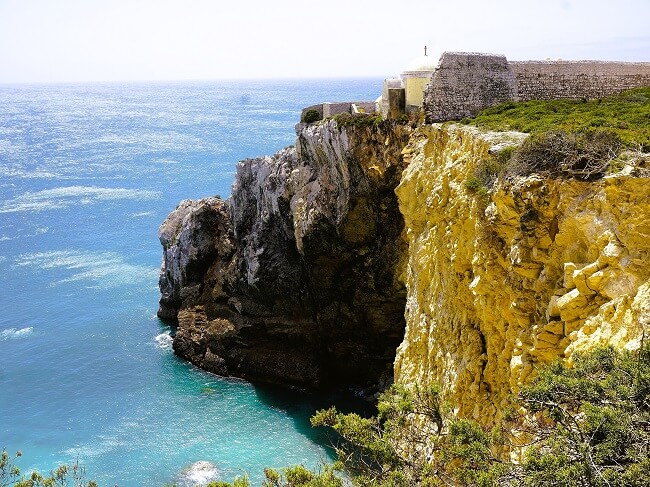
On the way to the Cape and on your way out, you will pass by the Fortaleza de Beliche. It is definitely worth stopping here for a while.
The fortress itself is closed and we could not go inside. So, we walked around it to admire the sheer cliffs.
Apart from the above two attractions, Sagres is home to a number of beautiful beaches. The best thing is that these beaches are not crowded.
CARVOEIRO
Just a short 30 minute drive from Armaco de Pera or Albufeira is this beautiful fishing village almost surrounded by sandstone sea cliffs typical of this part of Portugal.
There is a cluster of whitewashed houses on these cliffs with rolling hills in the background. It is less crowded and more laid back than Algarve’s bigger resorts in Albufeira. There are many shops, bars and restaurants.
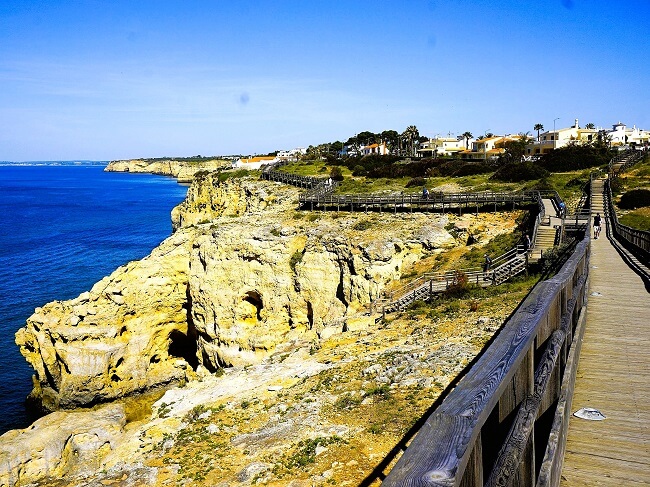
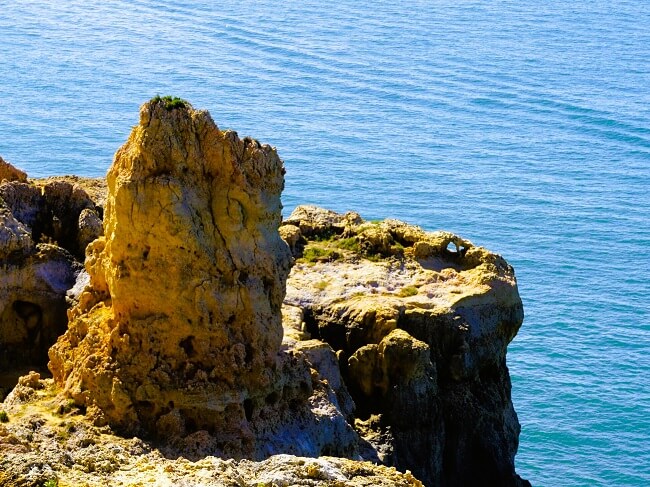

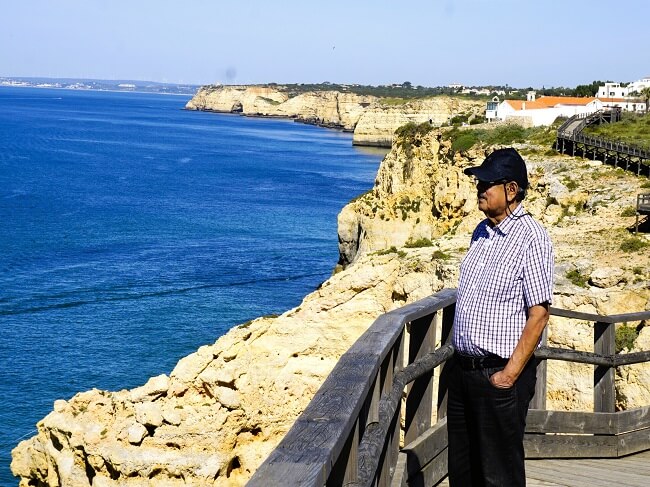
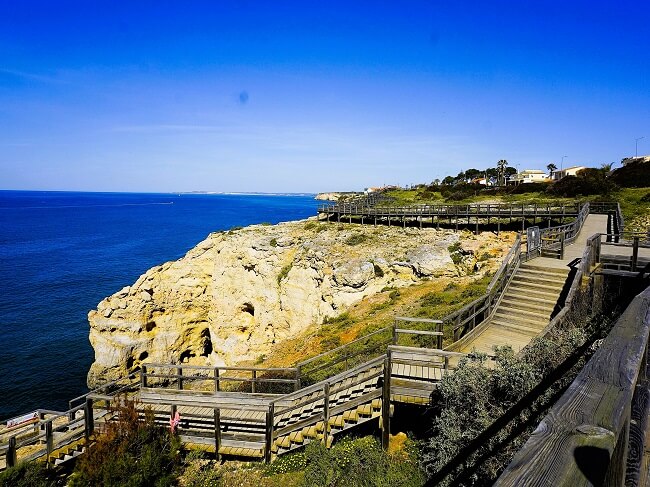
Carvoeiro has a 600 metre long wooden boardwalk all along the beach with lots of stairs. This provides easy access to view the beach and cliffs at various parts of the beach. Starting at the top of the steps near the fort and chapel, it runs further to the popular Algar Seco.
Algar Seco is a set of impressive ochre colored rocks sculpted by rain, wind and water, and has great viewpoints on the Carvoeiro coastline. We walked along the whole length of the boardwalk and enjoyed the views.
That was the end of our 3 lovely days in Algarve! We set off to drive northward to our next destination of Evora – a walled historic city with UNESCO World Heritage status.

I love exploring the coast of Portugal–your photos bring back great memories! If you haven’t explored the Alentejo coast yet, it is also worth a visit. It is as scenic as (or perhaps more scenic) than the Algarve coast and much less developed.
I was recently in the south of Portugal for the first time, in Faro, and loved it so much. While I didn’t go to any of the places you visited, this has given me some great ideas for next time as I’m sure there will be one. The coastline is beautiful and I really like the look of some of the stunning cliffs you posted photos of
This looks like a fantastic drive! I’ve been to some areas in the south of Portugal but reading this post makes me want to go back and explore much more, I agree that those views from Sagres look so dramatic.
I’ve explored northern Portugal over 3 times but the southern one is still unknown to me. this is inspiring me to go and visit the south and see these beautiful places. Tavira looks wonderful!
From the map, it seems like you stayed in the middle of the coast. The beaches are within driving distance, and in three days, you get to visit the famous beaches in Portugal. That’s great!
I am planning a Portugal road trip this summer and this blog post has helped so much! So thank you! The southern coast of Portugal looks absolutely stunning!
My favourite kind of beaches are the ones with dramatic cliffs and formations, so naturally this part of Portugal is very high on my list. Your photos are beautiful.
I live in Croatia so I had zero expectations about the southern coast of Portugal, yet my flight into the country was to Faro, so I stayed a few days to explore. And I completely understood the hype! It was quite crowded, but places like Ponta da Piedade make the stay absolutely worth it!
What a beautiful and inspiring journey through the Algarve! I visited southern Portugal a few years ago but didn’t make it to Praia Dona Ana or Ponta da Piedade—your descriptions make me want to go back just for those views. The colorful cliffs, natural arches, and sea caves sound like a dream for any landscape photographer. And Tavira looks like the perfect spot to soak up some history and slower-paced charm.
Portugal has so much to offer. We’ve only been to Northern Portugal and loved that, but the Southern Coast looks stunning.
I love southern Portugal—the sand, sea, and its remarkable, dreamy coastline—but I must admit I haven’t been as far south as Sagres. Your photos are amazing, and they have inspired me to do a road trip here. Saving this post for my future trip planning.
There are so many beautiful places in Portugal! I’ve only visited Lagos, so I would love to explore some of the places you covered in this article. I’ve always heard good things about Tavira, so that’s number one on my list.
This post brings back amazing memories of some of our favourite spots on the Southern coast of Portugal. The cliff sites and beaches are forever burned in my memories. Great that you visited some of the less touristy spots to see the real Portugal.