
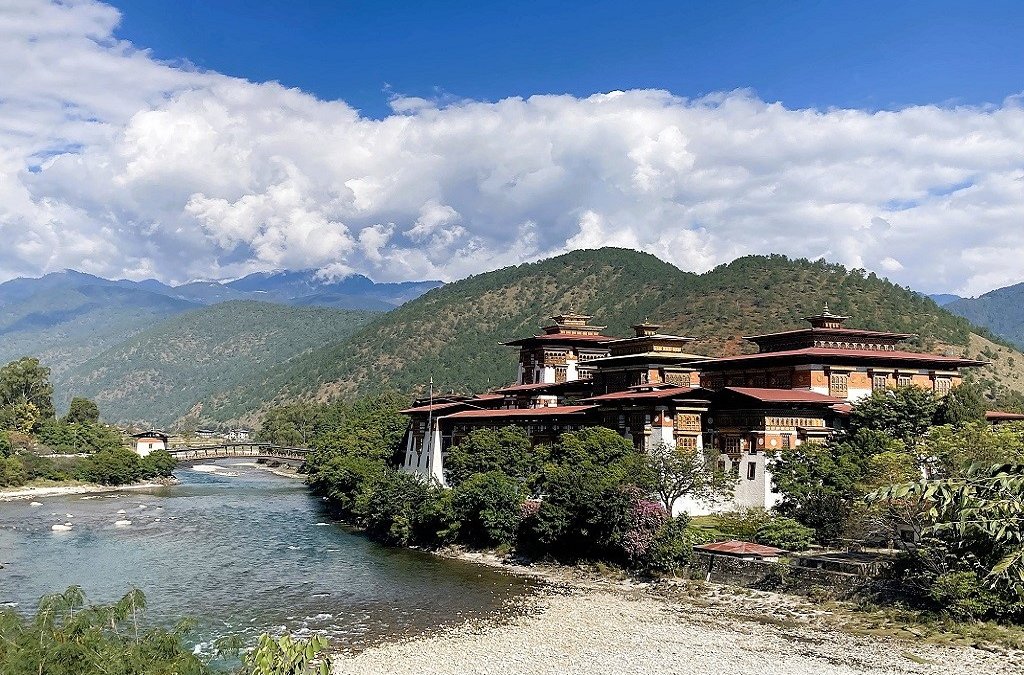
Bhutan is a land of mountains, nestled within which are the valleys where people live.
The most prominent amongst these is the spectacular Punakha valley, one of the warmest valleys in Bhutan, located about 73 kms (a 3-hour drive through twisty mountainous road) from Thimphu, the capital city.
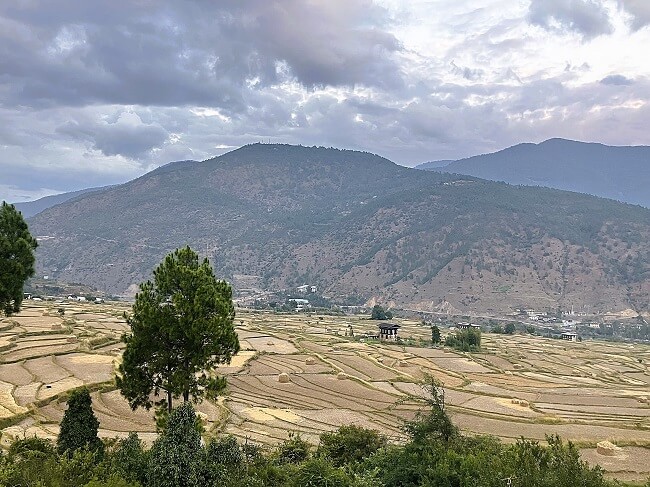
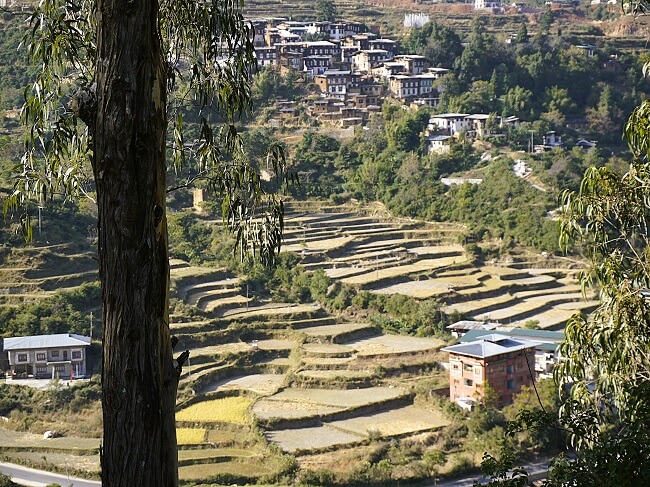
Punakha is the former capital of Bhutan. Due to its lower elevation (1,200 m), the climate is warmer than the other parts of Bhutan. Punakha district is also Bhutan’s primary rice producer.
Another distinctive feature of Punakha is the confluence of two of Bhutan’s famous rivers – Pho and Mo Chu. Near the point where these rivers meet is the most prominent landmark of Punakha – the Punakha Dzong (fortress).
These rivers are also home to one of the last surviving populations of the critically endangered, white-bellied herons.
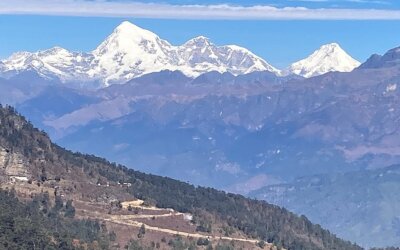
Punakha offers some awesome Himalayan views, some good trekking routes, Kayaking and Rafting, and several picturesque and serene temples/ castles.
We based ourselves in a lovely hotel overlooking miles of paddy fields, with mountains looming on the horizon, and enjoyed two days here.
PUNAKHA DZONG
A Dzong is a traditional medieval fortress in Bhutan that is partly an administrative office and partly a Buddhist center.
The Dzong is known for its size and architectural expertise, and also it is the venue for the most important ceremonies in the Kingdom of Bhutan.
The majestic Punakha Dzong is located at an elevation of 3900 ft (1200m). It is a 6-storey structure with a central tower.
The doors and windows of this fortress are built using stones, rammed earth and timber. It’s a huge structure with 3 courtyards. There is a big white stupa and a Bodhi tree in the central courtyard.
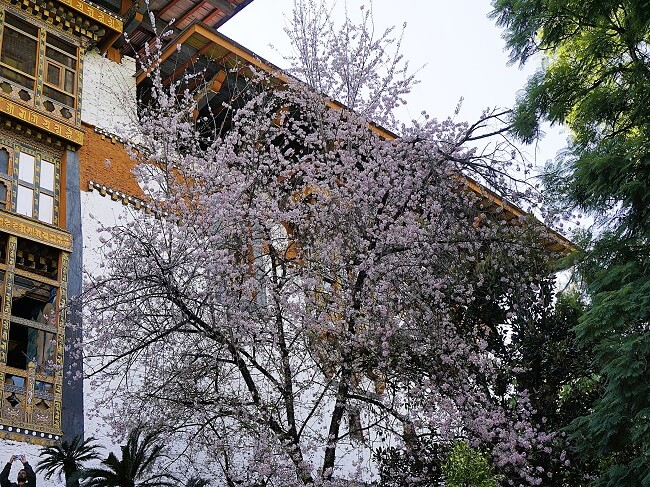
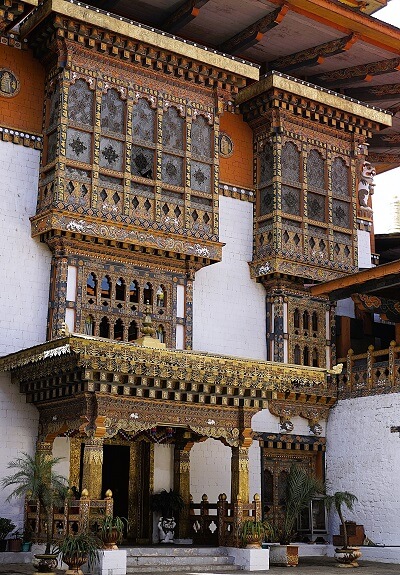
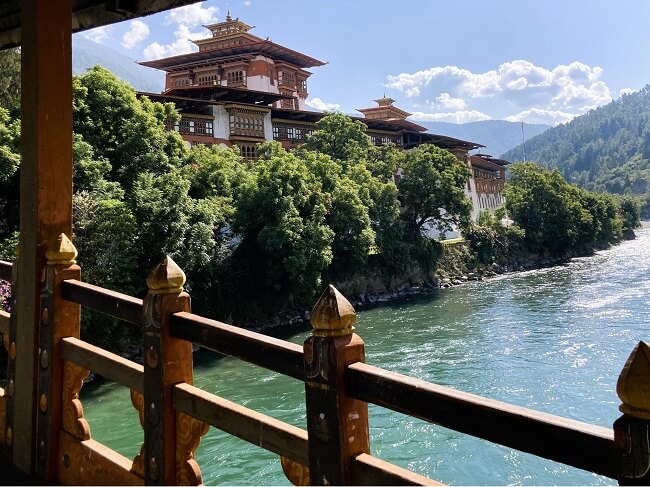
Punakha Dzong served as the seat of the Government of Bhutan until the capital was relocated to Thimpu in the mid 1950s.
There were attacks on the fortress by Tibet in 1939 and 1944, but it survived. The dzong also suffered fires between 1750 and 1849, and was badly destroyed by an earthquake in 1897 – but was rebuilt.
The beauty of Punakha Dzong lies in its location – the confluence of the Mo Chhu and Pho Chhu rivers. Bazam Bridge has to be crossed to access the Dzong.
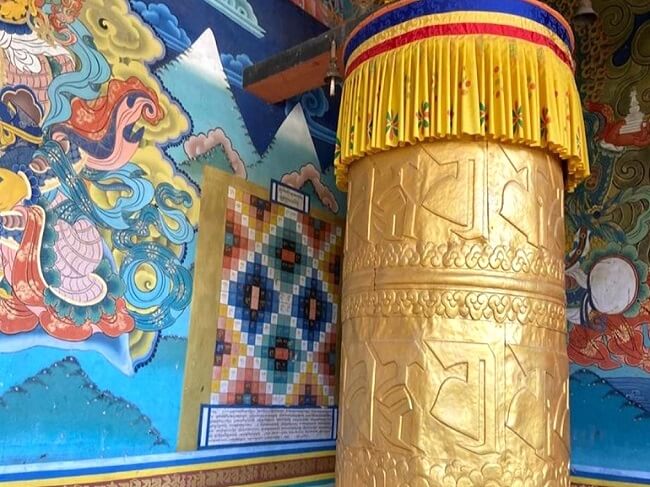
An impressive sight for tourists would be the exquisite murals in the ‘one hundred pillar hall’. It also has carved woodwork and colorful paintings – a perfect spot for photographers.
Although every season is good for a visit to the Dzong, the month of May is special with gorgeous purple Jacaranda flowers (Jacaranda mimosifolia) adding to the beauty of the courtyard. These flowers look a lot like the popular cherry blossoms!
PUNAKHA SUSPENSION BRIDGE
Stretching 160-180 metres, the Punakha suspension bridge is the longest pedestrian suspension bridge in Bhutan. Perched high above the Po Chhu river, this bridge is worth checking out if you are not afraid of heights.
The bridge is located above the broad and rapid Pho Chhu river. The bridge was constructed for the lamas of Punakha Dzong to visit the villages nearby.
It serves as a vital connection between Punakha town and Punakha Dzong, frequently used by locals as a convenient shortcut.
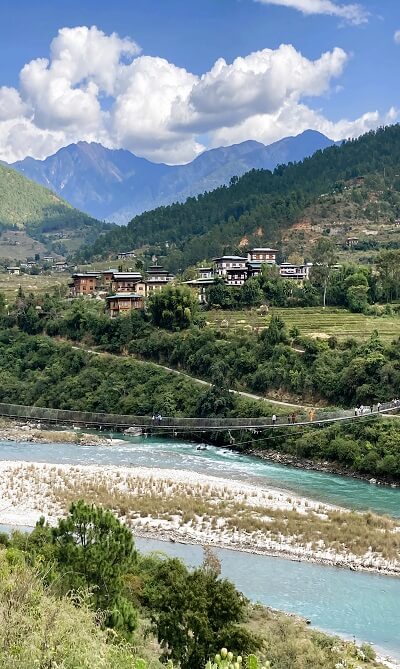
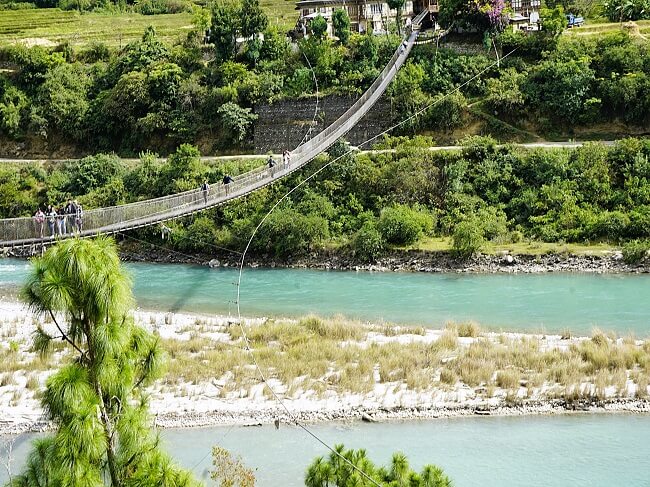
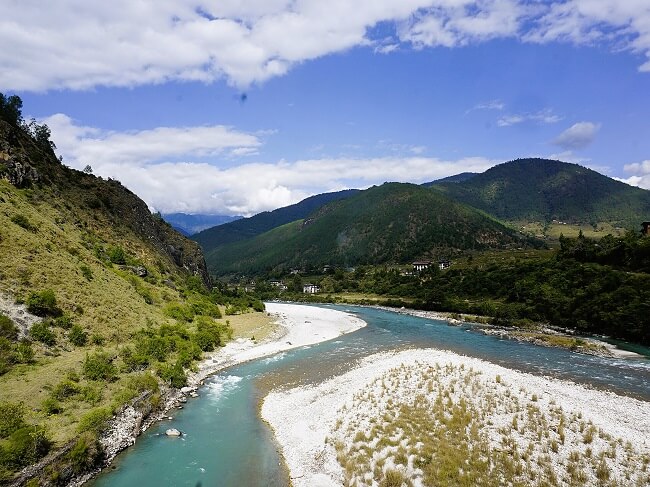
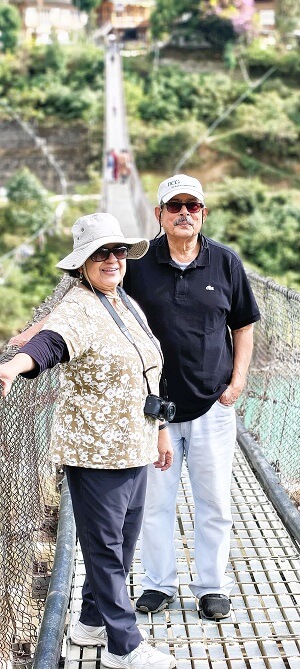
We loved crossing this bridge, with the wind swaying the bridge a bit, and enjoyed stopping now and then for some pictures of the valleys and rivers below. It was fun to enjoy an ice cream at the other end of the bridge.
There is a good half hour walk over uneven grounds to reach the starting point for crossing the suspension bridge. It is ideal for those who love the thrill of a quick adrenaline rush and spectacular views!
WANGDUE DZONG (Wangdue Fortress)
In the olden days, rivalry and fighting were common amongst the various tribes living in different valleys. This made it important for each valley to have a secure place for defence – a fortress (or two).
Built in the 17th century, the Wangdue Dzong was among the first dzongs built by Zhabdrung Ngawang Namgyel. Later, it was enlarged, more storeys were added and a statue of Lord Buddha was installed.
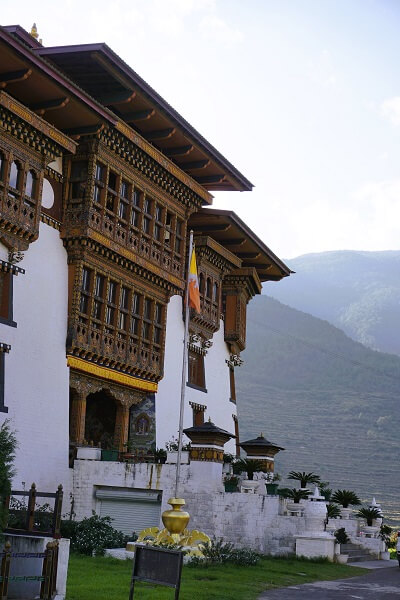
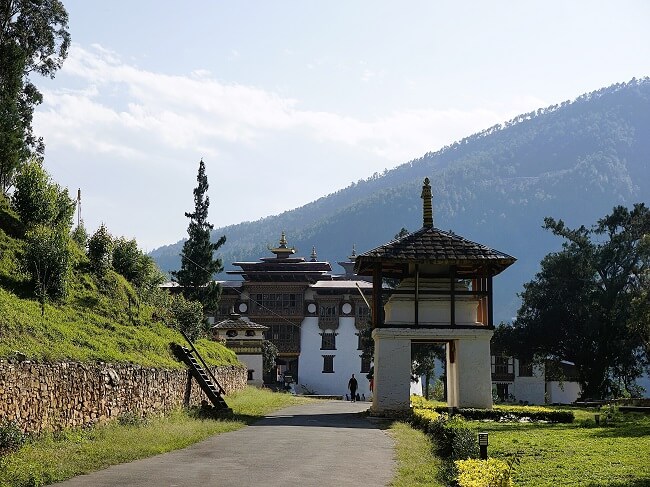
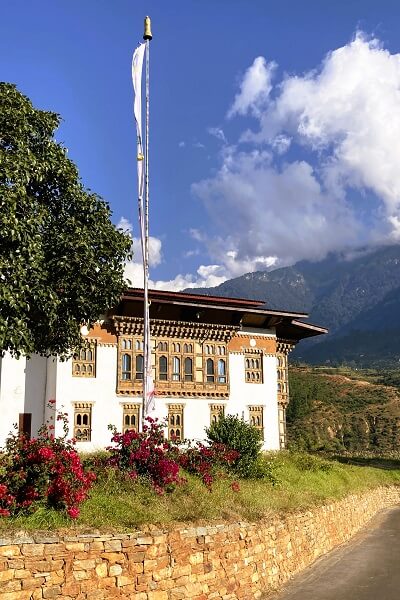
This fortress overlooks the convergence of two rivers – Dongchu and Punatshang chu.
As with many monuments around the world, Wangdue Dzong was destroyed a few times by fire, earthquake and even an electrical short circuit (latest in 2012), but was rebuilt every time.
The Dzong has 14 temples. There are 3 doorways and 3 courtyards. The first gate is the entrance, the second gate leads to the inner sanctum, and the third gate leads to the interiors of the structure.
A mentionable point – there are endless flights of stairs to climb, which makes the visit to the Dzong a mini-hike!
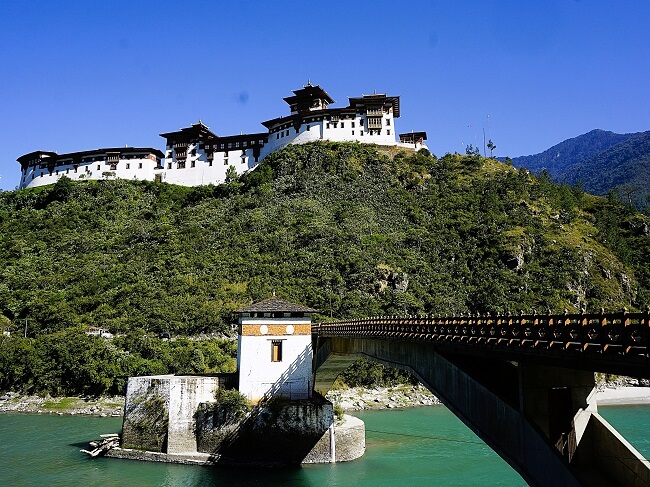
Wangdue Dzong can also be viewed from the Wangdue T Arch bridge below.
It looks magnificent!
ADVENTURES & HIKES IN PUNAKHA
There are many opportunities for river rafting, kayaking and camping in Punakha Valley.
RIVER RAFTING
Bhutan has many rugged, untamed rivers meandering through the mountainous terrain, which offer river rafting enthusiasts a great experience. A couple of the popular ones are :
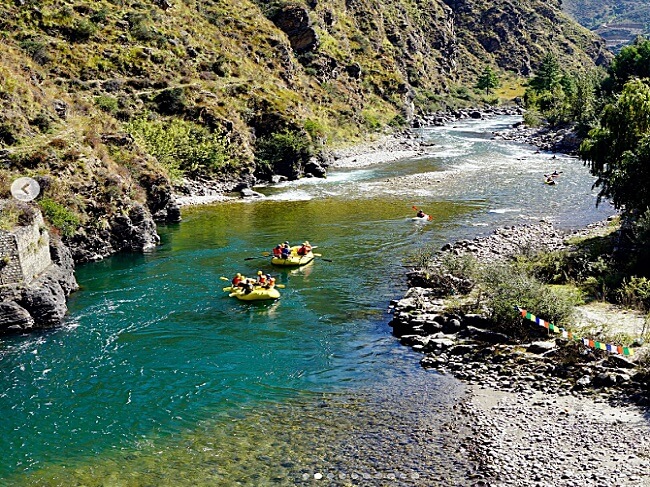
Po-Chhu River – is more of a whitewater rafting as it has rapids. Views are awesome, and the 16 Km course includes passing under a long suspension bridge.
Mo-Chhu River – takes about an hour and half to complete with a 10 km course. The views here include migratory birds, royal palace and gentle rapids suitable for older children too.
Kayaking is also offered in some rivers in Punakha valley.
HIKES & WALKS
– Lamperi Botanical Park near Dochu La offers long stretches of walks
– Khamsum Yuelly Namguel Chorten – A 4-storey temple perched on top of Yambesa Hill – This offers hikes for an hour or so high on the hill in the upper Punakha valley.
– Visit Jana village. The hike starts from the suspension bridge near Kichu Resort. Cross the Dang Chhu river. The route traverses a village, rice fields and takes about 1.5 hours to reach Jana village. The to-and-fro hike takes about 3 to 3.5 hours.
– Lamperi to Lumbitsawa – This is a 4-hour hike mostly downhill through forest ground from Lamperi Park. It is great for birdwatchers especially in Spring and Autumn.
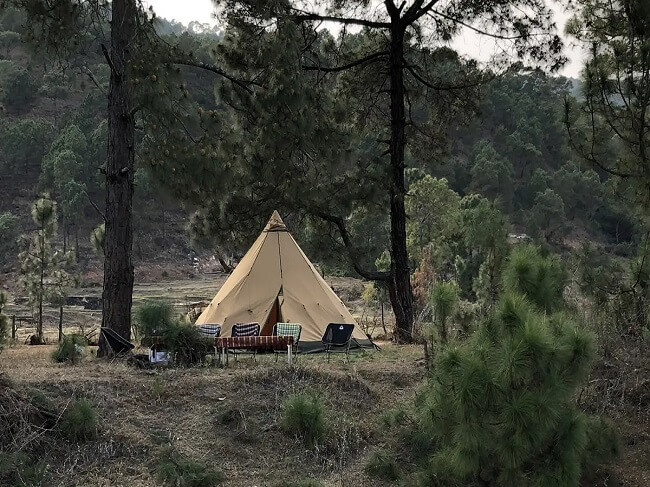
For the serious enthusiast, there are several long treks, lasting up to a fortnight, which take you to the remote corners of the kingdom. There are also camp organizers who help groups interested in camping.
After spending a couple of days in Punakha, we moved on further northeast towards Bhumthang for more adventures.
Bhutan looks absolutely incredible, and your photos and stories from Punakha make it even more tempting to visit. Reading about the dzongs, rivers, and hikes has definitely secured it a top spot on my dream travel list!
I’m not big on hiking but I do enjoy a leisurely walk, particularly with great views. And that suspension bridge looks like a great walk!
Punakha sounds absolutely stunning. The mix of warm valley weather, rivers coming together at the Dzong, and those Himalayan views really makes it special. I love how you explained both the history and the everyday experiences, like crossing the suspension bridge and even stopping for ice cream. Bhutan has been on my bucket list for a long time, and this post makes Punakha feel like a place you actually slow down and truly experience, not just visit.
Punakha is definitely going on my list of places to visit. I’d definitely love to see the medieval fortresses, go kayaking and river rafting as well. Bhutan is truly a dream!
Diving into the history, exploring fortresses, taking long walks and hikes, and kayaking in the Punakha Valley would make for a wonderful vacation!
Gosh, this is so incredible! I would absolutely love to visit Bhutan. It’s a bucket list destination. Was the Buddhist culture on display? Do you see many monks in Bhutan?
Yes. The Buddhist culture and beliefs are on display. There are many monks especially in the Dzongs.
Love photo of the bridge – it looks so fun to cross! Thanks for sharing about all of the hikes, too!
The Punakah Valley looks amazing! I haven’t heard of it before. I would definitely be in for walking the suspension bridge and the river rafting looks like loads of fun.
Wow Bhutan looks incredible! The Punakha suspension bridge and the area surrounding it looks amazing – I mean, those colors?? Would love to visit one day.
I have been wanting to visit Bhutan for some time now. It looks so incredibly beautiful. That suspension bridge! Wow! Thank you for sharing your experience. Makes me want to visit even more.
Wow, this place looks incredibly beautiful! I would love to cross that bridge!
What stunning architecture. And the scenery looks so calming, ….you just want to take a deep breath and slow down .
Can’t believe you walked across THAT bridge! :))