
Alentejo, in the south of Portugal, is a region that is popular for its historical sites, expansive plains and cork production. It is located north of the Algarve and south of the Tagus river. It stretches from the Spanish border in the east to the Atlantic on the west.
We just scratched the surface of Alentejo – visited Evora, a UNESCO world heritage town and the capital of Alentejo, and the historic Monsaraz castle.
We drove in from Almacao de Pera after 3 days in Algarve and based ourselves just inside the old wall city of Evora, a great location with several historical attractions within walking distance. Taking the car out in Evora is a pain manoeuvring through the narrow streets and finding no parking space! So, we parked our car in one of the ‘free parking lots’ nearby and explored the city by foot.
Évora is marked by Roman, Moorish, and Portuguese influences. You see all of this in the well-preserved Old Town, Roman Temple, and medieval walls. The city flourished during the 15th century as a center of arts and learning under the patronage of the Portuguese kings, becoming a symbol of the Golden Age of Portugal.
EVORA CATHEDRAL
The Cathedral of Evora is one the best places to visit. Built between 1186 and 1250, the cathedral is quite an impressive monument. It is made almost fully with granite. The chapel of Evora Cathedral is a unique example of the hybrid Plateresque architecture.
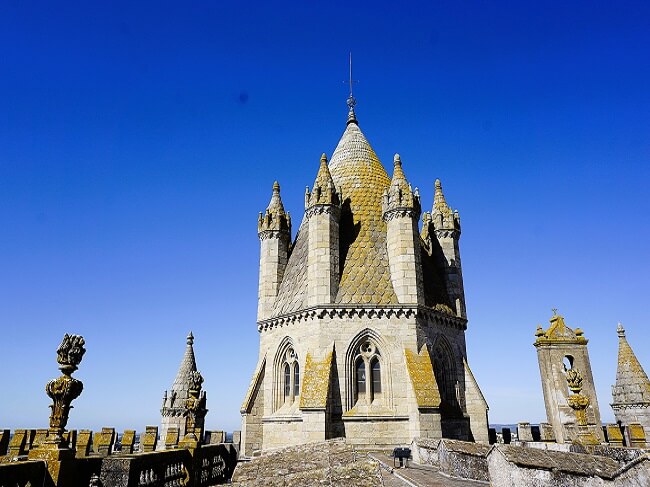
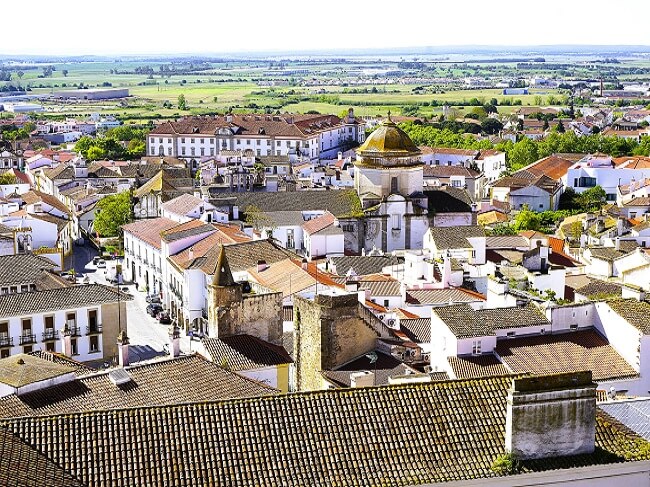
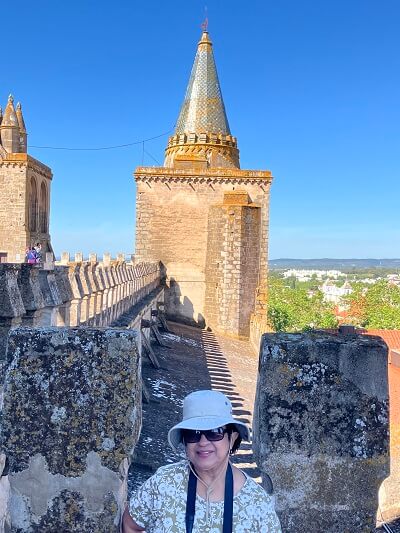
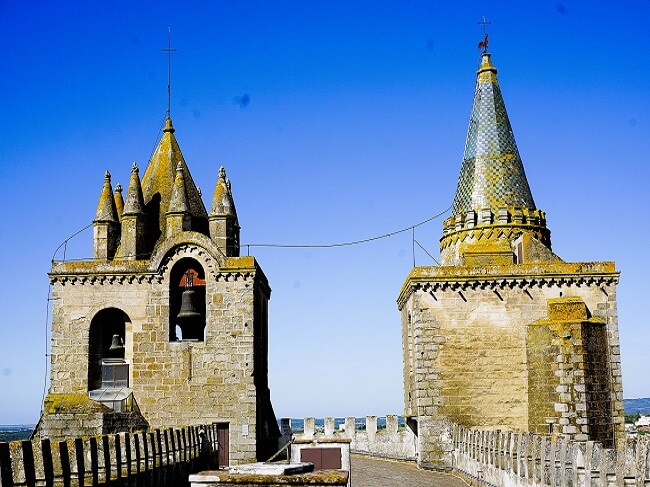
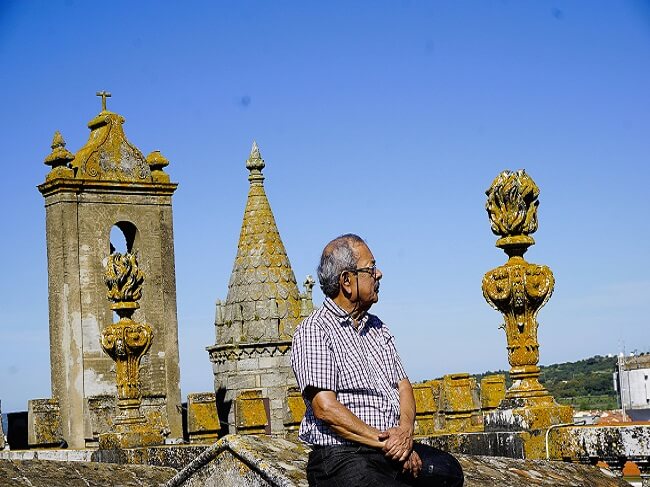
There are two bell towers, one of which has a narrow spiral staircase (135 steps) which gets you to the terrace. This terrace is the highest point of the city. The views from here include the entire historic city within the walls and the new city with many neighbourhoods. Some extensive plains and mountains of Ossa and Portel can also be seen on a clear day.
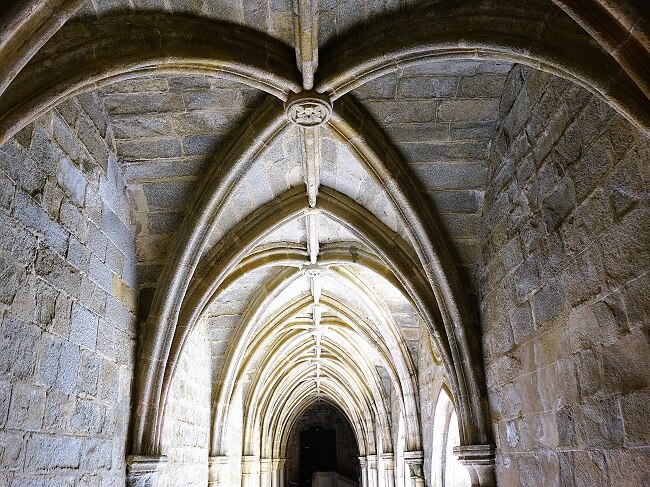
After spending time at the terrace, we walked down to the cloisters, formed by Gothic arches, surrounding the courtyard inside.
We were impressed by the workmanship of the main Gothic portal of the cathedral – quite detailed, featuring the sculptures of the twelve apostles and ornate carvings.
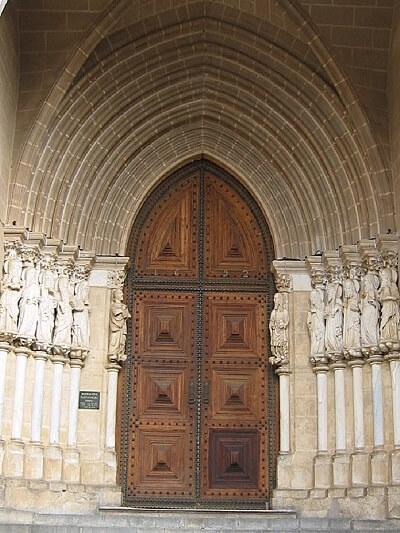
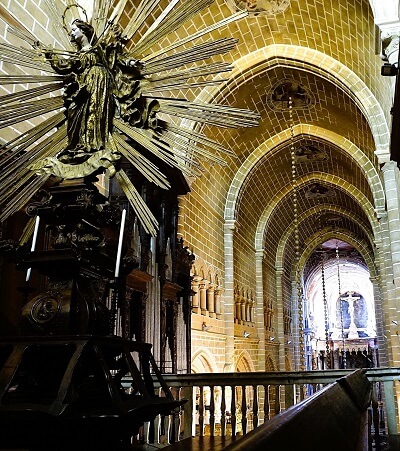
It took us over 2 hours walking through the cathedral, the terrace and the museum.
ROMAN TEMPLE
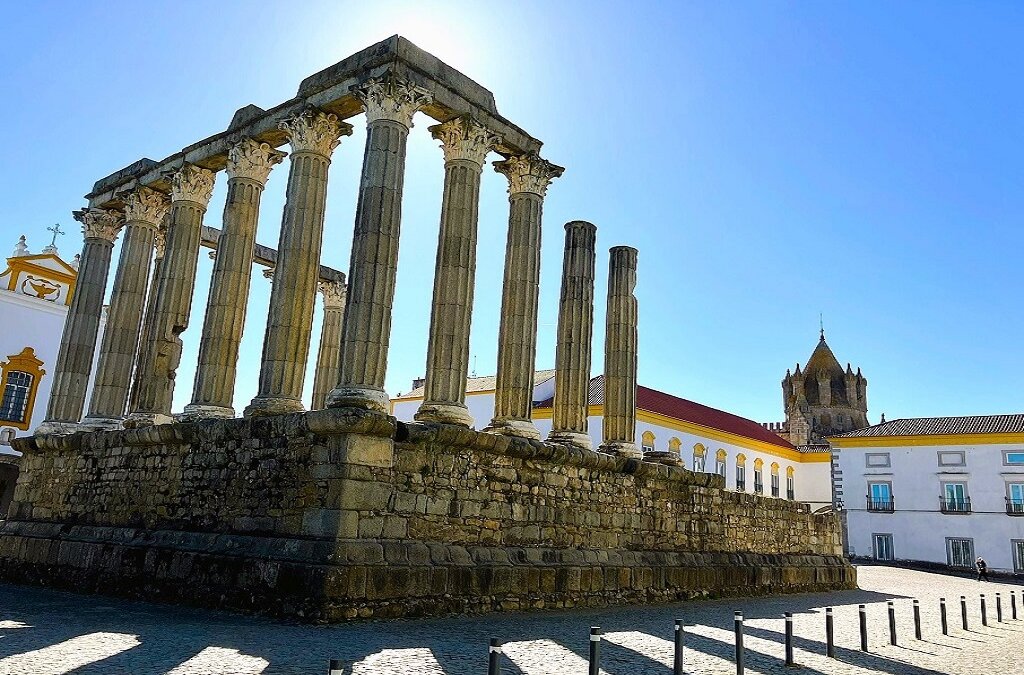
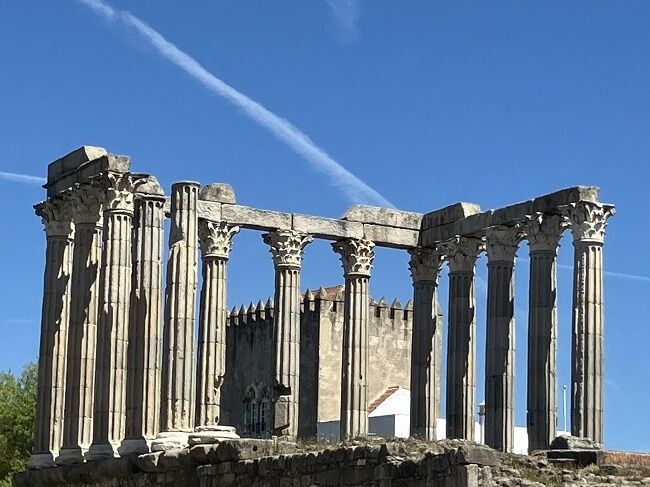
Another interesting historical sight, almost adjoining the cathedral is the Roman Temple – also known as the Temple of Diana. It is a well-maintained structure that is symbolic of the city’s ancient Roman culture and architecture.
We have seen an almost identical structure, also the temple of Diana, in the Spanish city of Mérida in Extremadura, just across the border from Evora a few years ago.
PRACA DO GIRALDO
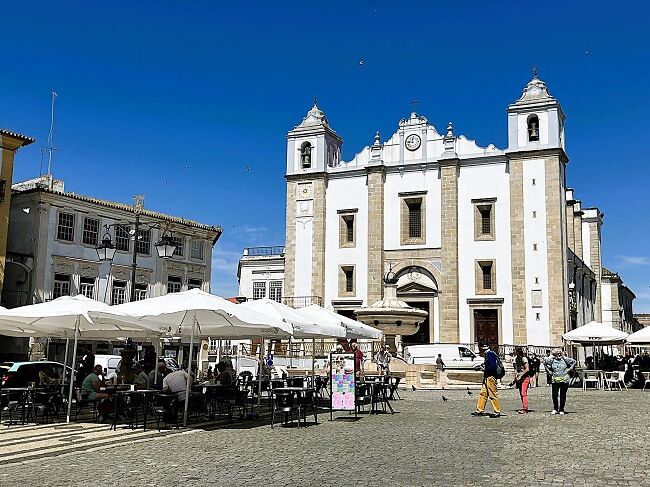
It is the historic square in the middle of the city. It is a vibrant place with many cafes, restaurants and shops. The 16th century marble fountain is the central attraction with the Church of Santo Antao and the Banco de Portugal building near it.
JARDIM DIANA
This public park is just a stone’s throw from the Temple of Diana. It’s a great place with a lot of greenery, flower beds and large architectural odd-shaped structures and some statues. One of the statues is dedicated to Francisco Eduardo de Barahona Fragoso – a renowned Portuguese writer. If you walk to the edge of the park, you can get a great view of city below.
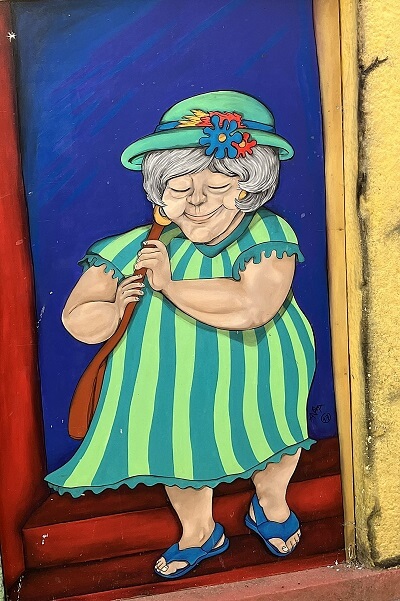
We admired an interesting image/ mural of a Portuguese woman drawn by a talented artist outside one of the buildings in the city. See below.
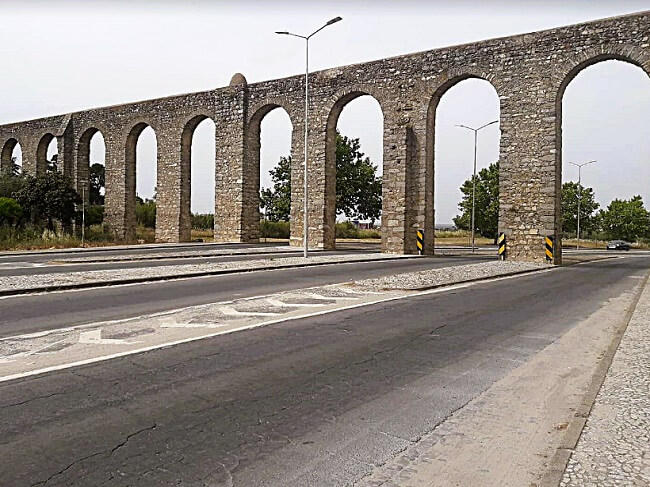
AQUEDUTO DA AGUA DE PRATA
This massive Roman aqueduct looms large over the medieval town of Evora–when approaching Evora from east or west it is one of the first things you see.
Also called the Silver Water Aqueduct, it is an engineering marvel from the Renaissance era, constructed between 1531 and 1537. It was designed by architect Francisco de Arruda, and spans approximately 9 kilometers.
Winding its way through the countryside, channeling water from Graca do Divor reservoir, the aqueduct supplied the city with water for more than four centuries until 1979.
It was interesting to see that some sections of the aqueduct, particularly along Rua do Cano, feature houses, shops, and cafes integrated into its arches, blending historical architecture with modern living. This aqueduct displays Portugal’s engineering prowess and remains an important part of Evora’s water supply system. Once again, this reminds us of a similar aqueduct and a gravity dam in Merida, Spain (just across the eastern border).
NATIONAL POWER OUTAGE IN PORTUGAL
During our stay in Evora, we experienced the scary power outage situation (called the Iberian peninsula blackout) that affected the whole of Portugal and the peninsular parts of Spain. It lasted for over 10 hours from around midday on 28 April 2025. We had to scurry around to get some candles, ready-to-eat groceries and beverages, not knowing how long it will last. We survived, however, and were happy that it ended sooner than expected! Also, it was the month of April and so the weather was kind and cool or else we would have fried in the Portuguese summer heat!
On the third day, we drove out of Evora to explore some more historic sites. We headed towards Monsaraz which is about 60 kms away and took over an hour to reach.
REGUENGOS DE MONSARAZ
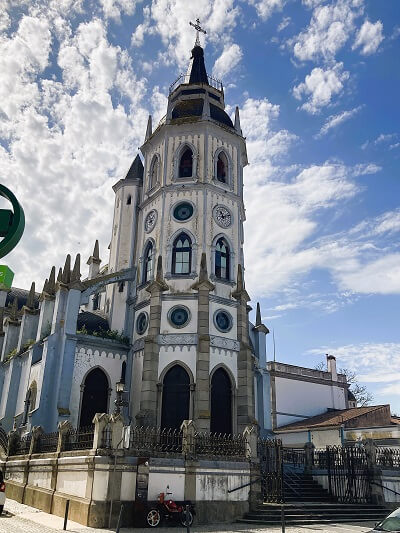
We stopped here en route to Monsaraz.
There is an imposing church called San Antonio Church visible from quite a distance.
The church, also known as Igreja Matriz de Santo Antonio, is a tall and narrow structure shaped like a Latin cross, with a bell tower in the middle of the façade. We would have liked to explore the insides of this church but the doors were closed. Apparently, this happens when you visit places at times other than the peak season!
Apart from the church, there were open markets here selling handicrafts such as pottery items and handmade Reguengos blankets. The central square has a few cafes and restaurants.
MONSARAZ VILLAGE & CASTLE
A charming medieval village and the castle of Monsaraz are perched atop a hill with stunning views of the surrounding vineyards, the Alqueva Lake and the Guadiana Valley.
When you drive up the hill, you will first reach this big open area with panoramic views from all around the edge.
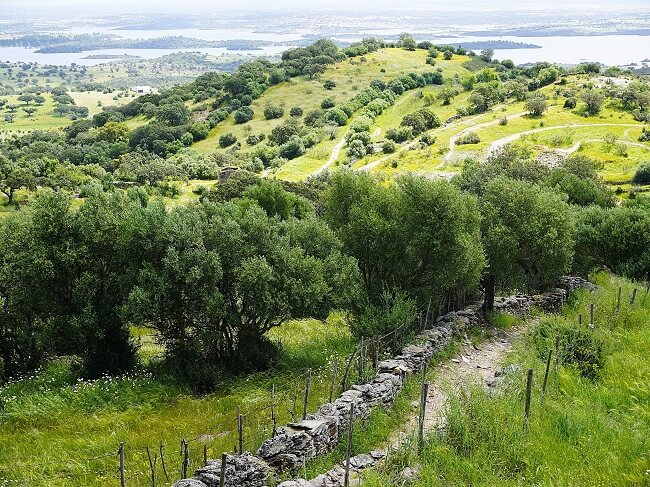
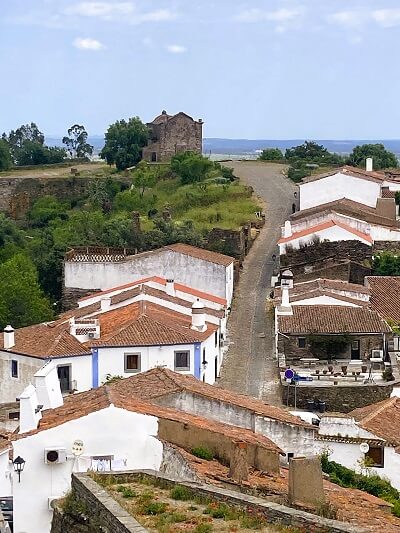
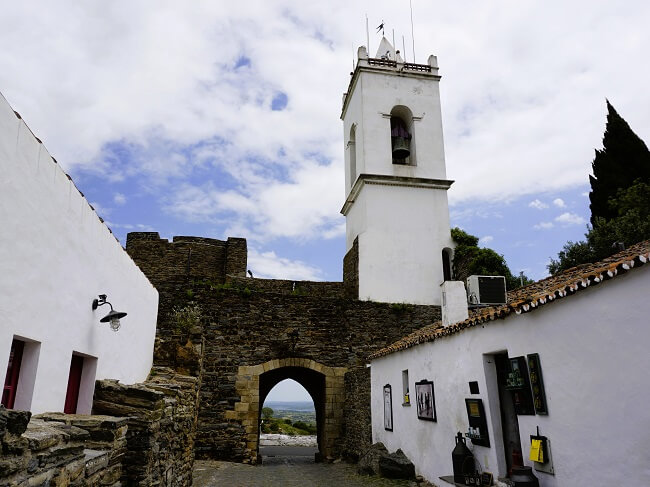
Then you drive further up on the steep road to reach the village and the castle.
Its well-preserved ancient walls, narrow cobblestone streets, and whitewashed houses take us to a picturesque step back in time. The village also has a church, shops and restaurants.
As per history, the medieval village of Monsaraz took shape over 800 years ago. There are many megalithic structures such as cromlechs and menhirs. The village with its present structures and fortifications was developed in the 12th and 13th centuries after the Christian reconquest of the Iberian Peninsula.
What do you do in Monsaraz?
Stroll the slopy cobblestone streets of the village, enjoy the views of the valleys below from every corner, and perhaps have a meal in a restaurant with a great view.
You can see the Alqueva Lake, a vast artificial lake created by damming the Guadiana River. It is the largest reservoir in Western Europe. Boating and bird watching are popular activities near the lake.
We were surprised to see shops selling olive oil, soap, herbs and alcohol too!
A key spot to visit is the Monsaraz castle standing at the southern corner of this fortified village.
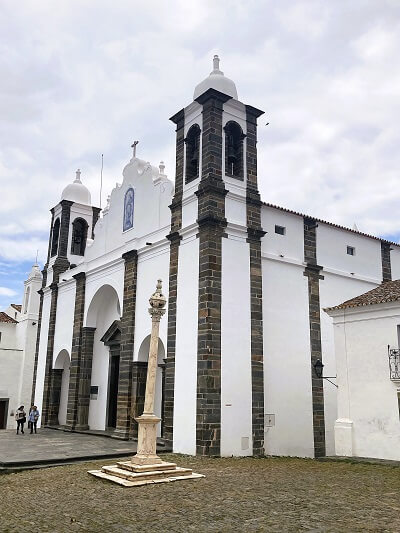
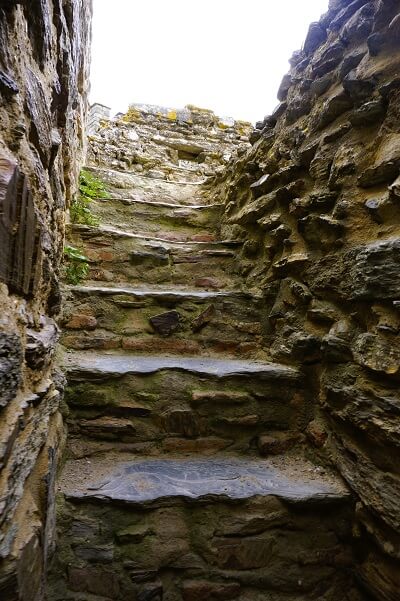
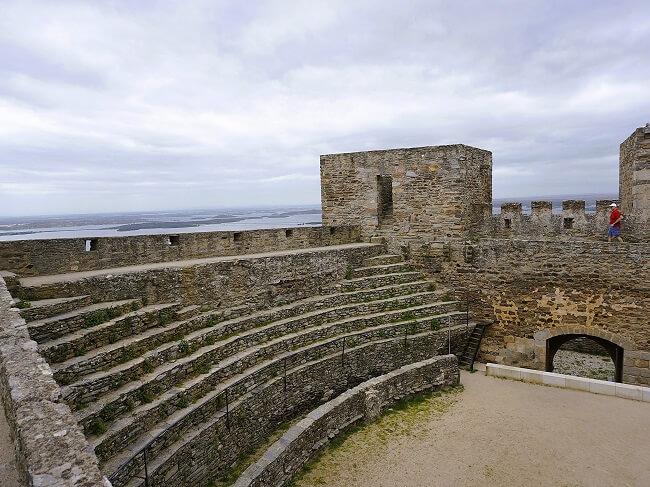
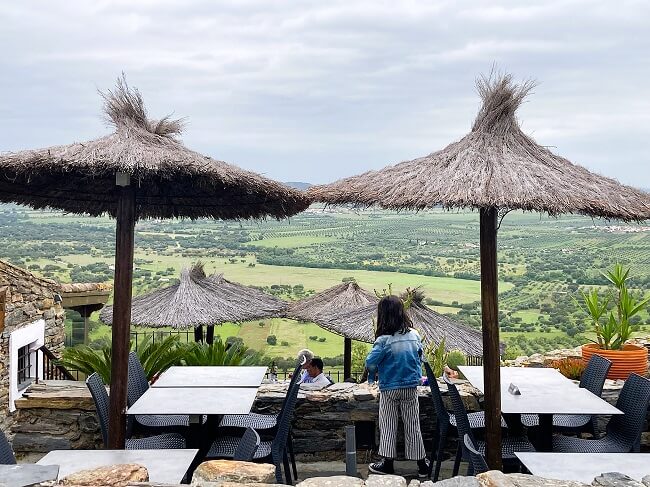
Constructed in the 14th century, it served as a military stronghold and then later was used as a bullfighting arena in the 19th century. We walked the grounds of the arena, climbed to the top and really enjoyed exploring this place.
Another place to visit is the church – Igreja de Nossa Senhora da Lagoa. Thankfully, the church was open to visitors and we could admire the 14th century marble tomb and the carvings of saints.
After a lovely day out, we drove back to Evora, our base.
We had 3 lovely days in Alentejo region soaking in Portuguese history and headed further north to discover more of Portugal.

Inside, the Evora Cathedral looks quite impressive. I can’t imagine how they built it with granite. The historic square sounds like a charming place to rest after a long day of exploring. And I like that Portuguese woman mural, which represents the image of the women of Portugal.
I love all the medieval architecture. Those Gothic arches looked stunning. I hadn’t heard lf Evora or the Alentejo region before reading this. It’s looks lovely.
Glad you had a chance to visit Évora, one of our favorite smaller cities in Portugal. Sorry about the timing with the power outage, we had been elsewhere in Portugal and luckily flew out the day before. If you return to Évora, I’d recommend also visiting the megaliths in the area, which were really incredible.
I was surprised to learn about the (more recent) viaducts built in Evora – very nice engineering! Many people would assume they’re Roman and thousands of years old. It was interesting to hear a first hand perspective of that major power outage in Spain & Portugal- that must have been disorienting.
I haven’t had the chance to visit Évora yet, but it looks like such a beautiful and culturally rich place. I’d love to explore the Roman Temple and walk through the narrow streets of the old walled city. The mix of Roman, Moorish, and Portuguese history sounds fascinating. Definitely adding Évora and the Alentejo region to my Portugal travel wishlist! These photos are stunning!
We were so glad we got to see Evora when we were in Portugal last. It was definitely a great reason to visit the Alentejo region. We did not visit long enough to see al that you did. Even though you had a power failure during your visit. I guess this means we need to go back.
Oh, I love everything about Portugal. It’s such a nice country with great tourist perspectives. I especially like the Algarve region, but Evora also looks very interesting. Is it difficult to come to Evora from Algarve towns?
Both Algarve and Evora are lovely places to visit. It takes about 2 and half hours to drive from Albufeira to Evora. 🙂
The cathedral is stunning, and what a view you get from the top of it. The rest of the town looks just as pretty, so many nice churches and historical sites. I’d love to go back to Portugal, so it looks like I’ll need to spend more time in the south next visit.
There are so many beautiful places in the south of Portugal, I keep adding more and more to visit. I would love to visit Evora too.
Oh, I absolutely love visiting UNESCO World Heritage sites. Always the best way to get a feel for the history of a region.
Evora is indeed a marvelous place to visit in the Alentejo region with lot of historical significance to consider. The stunning Evora cathedral with its unique Plateresque architecture featuring conical towers and gothic cloisters is visually appealing. So is the Roman architecture of Temple of Diana.
The medieval village of Monsaraz stands in an eternal beauty with its cobble stone streets surrounded by cafes, shops, vineyards and the white washed houses . The grandeur of the castle with the vast arena and panoramic views of the city make Evora a traveler’s paradise.
The mural of the lady on the walls and the silver water aqueduct represent the artistic and architectural marvels of the city.