
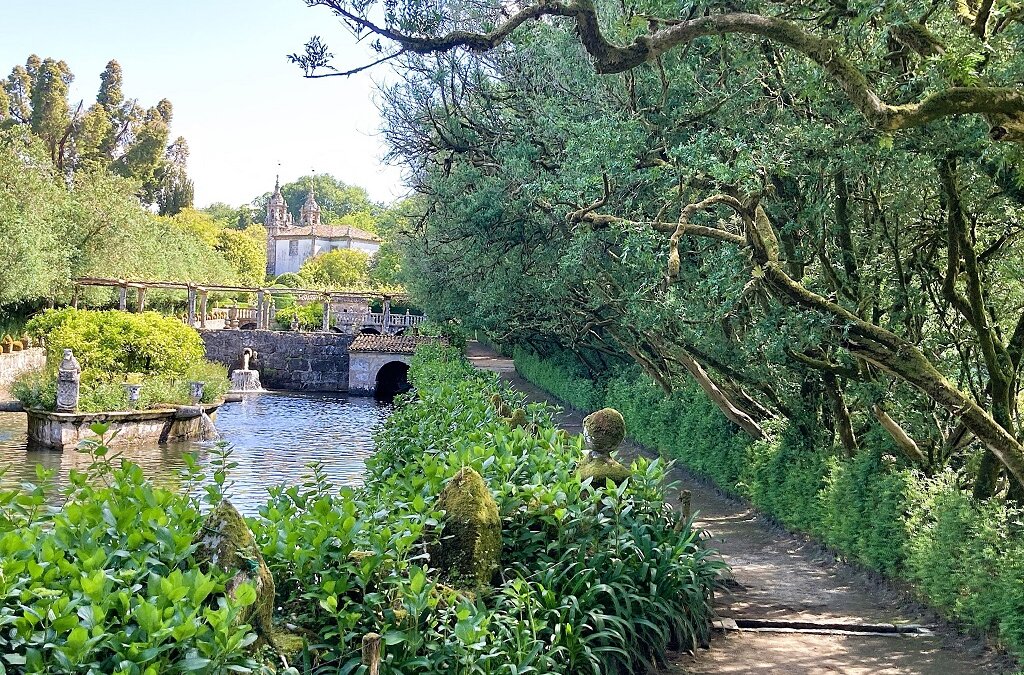
Meandering country roads, abundant greenery, picturesque streams, and old churches.
Who could ask for more?
But wait…..
Throw in a couple of spectacular palaces, too!
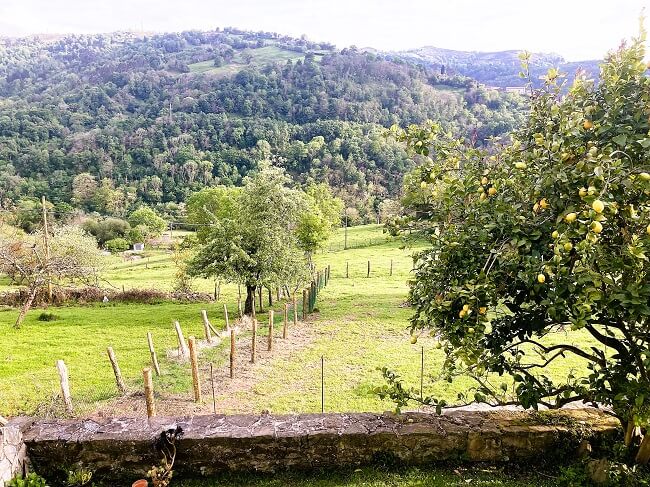
This is what we came across during our road trip through Northern Spain, where we happened to stay in a remote village called Lugar Vilar Riberio – just 40 mins drive from the famous Santiago De Compostela.
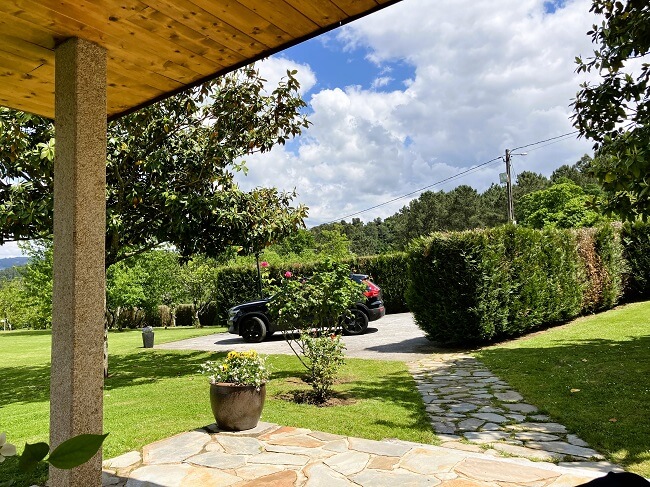
We stayed in a cute, stand-alone cottage with a kitchen and two small bedrooms, an acre of green lawn and no visible structure for miles in front of the cottage. Admittedly, the Wifi worked only on our iPhones and not on our laptops, but never mind.
Every walkable road around had huge slopes, and even a half hour walk gave us a good workout. The weather in May was simply perfect – pleasantly cool with blue skies and bright sunshine.
We spent 3 days here cooking, relaxing and enjoying our time in this heavenly countryside.
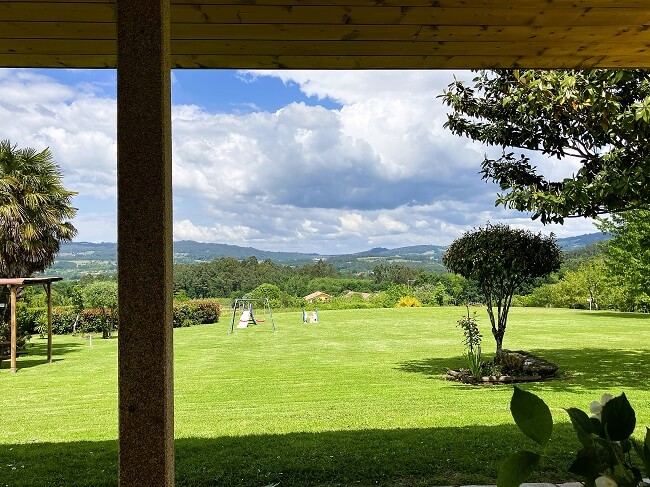
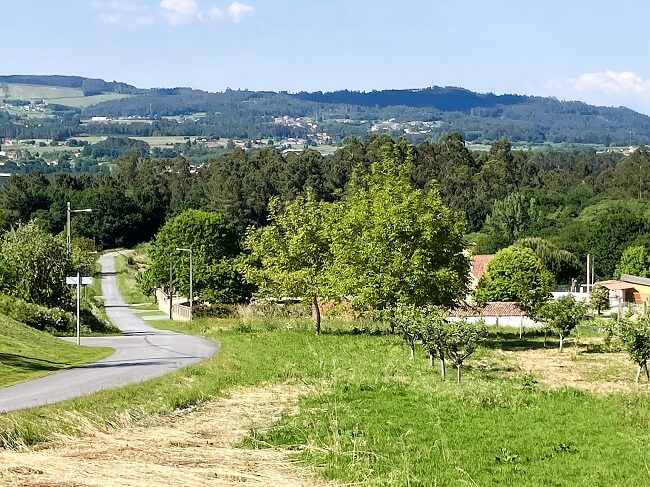
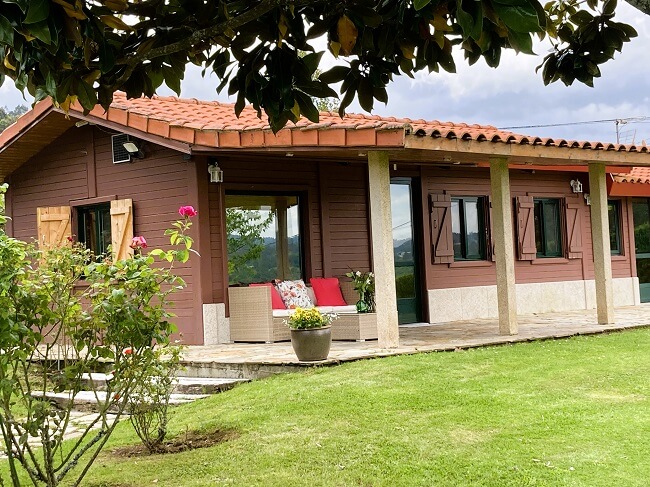
During our drives around the place, we came across some real hidden gems.
PAZO DE OCA or PALACIO DE OCA
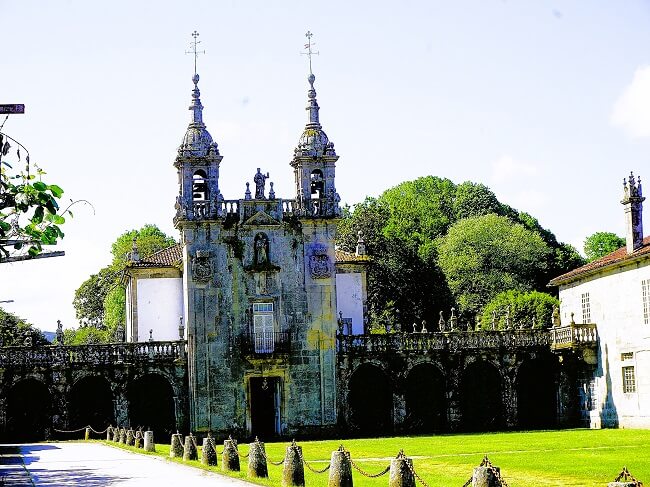
A very pleasant half-hour drive through lovely country roads brought us to this beautiful 18th century palace located at a short distance from Santiago de Compostela in the A Estrada region of Galicia.
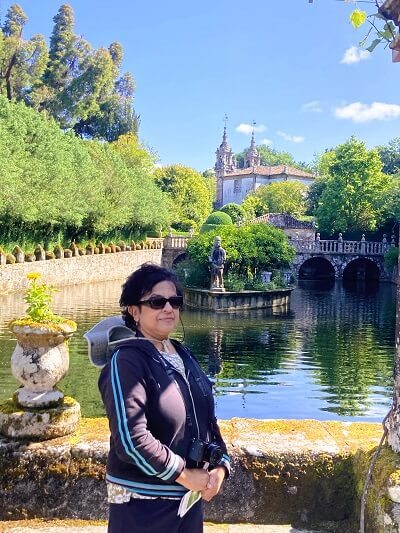
The entrance doorway leads to a huge square dominated by a Baroque chapel and a prominent stone cruceiro (Gaelic cross), connected to the palace by a gallery. Moving onwards, you will enter a historical complex which includes the palace itself and the gardens.
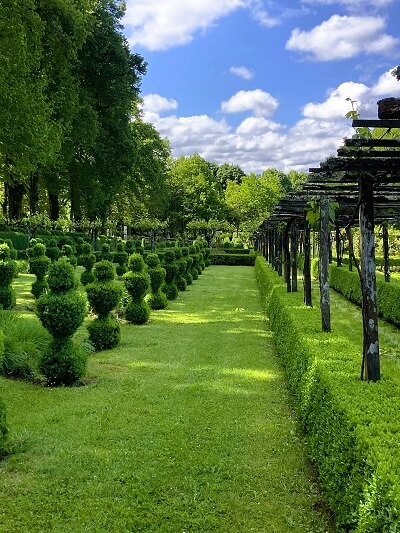
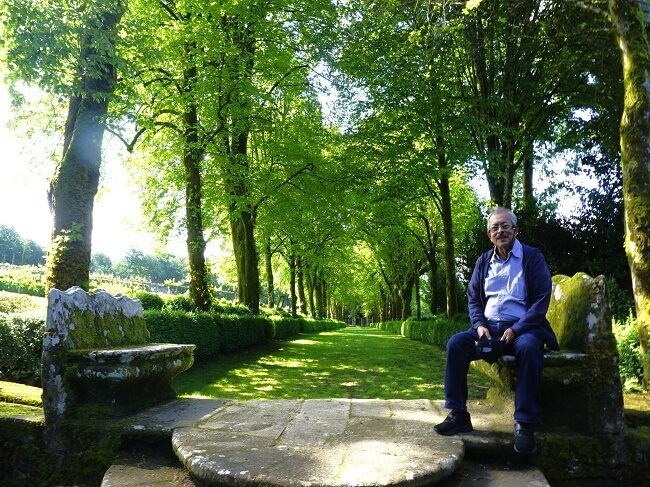
The whole estate is built in Baroque architecture, and its well-maintained gardens stretch for miles around it. Camellias, Magnolias and Azaleas feature amongst the variety of plants in these gardens, arranged in a French style totally unique in Spain.
A walk through its huge gardens took us a couple of hours as we stopped here and there to admire and take photos.
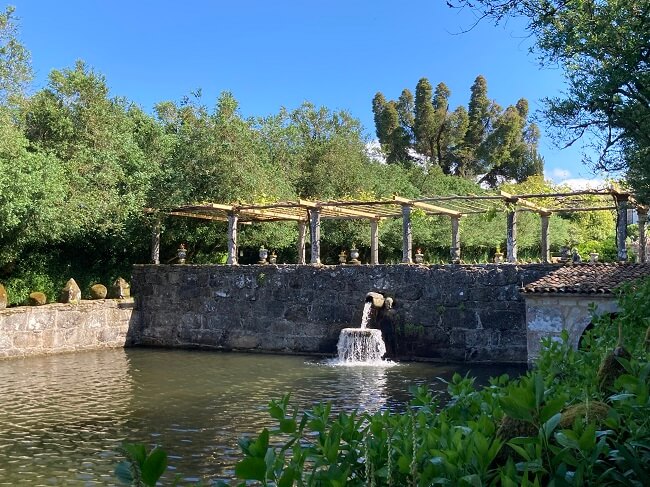
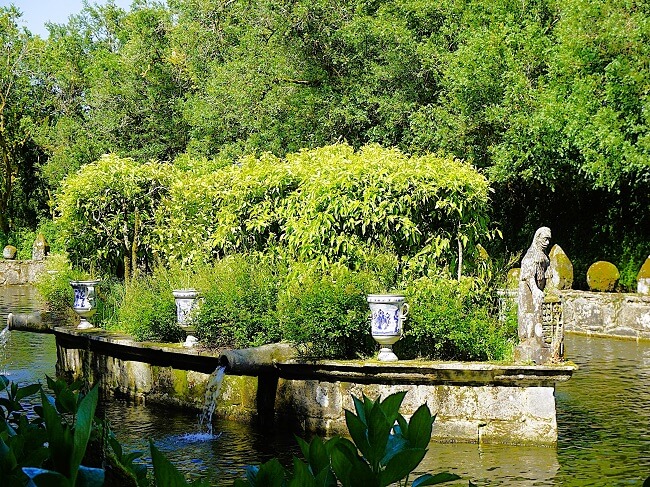
There are ornamental ponds and intricate stonework – the perfect location for lovers of horticulture and history. We were impressed by the channeled waterways with swans and geese swimming in them. The water is made to flow very cleverly, using the natural slopes of the land and the force of gravity, through ornamental fountains and channels that provide water to the plants.
Apart from ornamental flowers, there are groves of oranges and lemons on different levels
This Pazo is truly a testament to the grandeur of Galician nobles and gives a feel of the Galician cultural heritage.
It is totally enjoyable to drive to this hidden gem through beautiful winding village roads with tons of greenery around. Walking through the vast gardens and admiring the ponds, stonework and landscape provides a great workout for the legs and feast for the eyes. Apart from history, the palace and gardens would best suit photographers and those who love to visit less-crowded destinations with countryside settings.
The popular name “Versalles Gallegos” meaning the Galician Versailles by which it is known, is very apt for this beautiful castle and gardens.
PAZO DE SANTA CRUZ DE RIVADULLA
Pazo de Santa Cruz de Rivadulla is another impressive historic estate with a vast garden. It is located in an ancient site called Ortigueira, in Ulla Valley near Sacro Peak in Vedra, Spain.
The Armada family, who have owned this property for several generations, have put in a lot of hard work to wall up the property and divide it into distinct areas – forest land, agricultural land, an orchard and a garden for the house. The planning and development of the estate was originally done way back in the 1870s.
The popularity of this place is based on two things: its exclusive and vast collection of Camelias and its unusually dense Olive tree garden.
Three main attractions here – Olive tree walk (for miles), a unique boxwood tunnel and a pretty waterfall.
Botanists, historians, photographers and those interested in long garden walks will love this place.
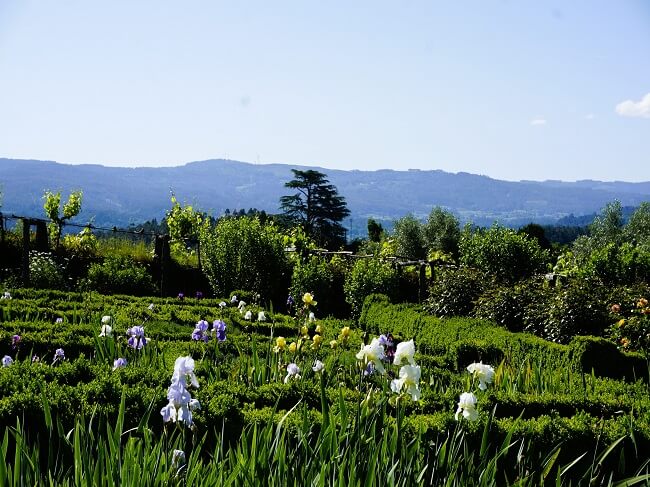
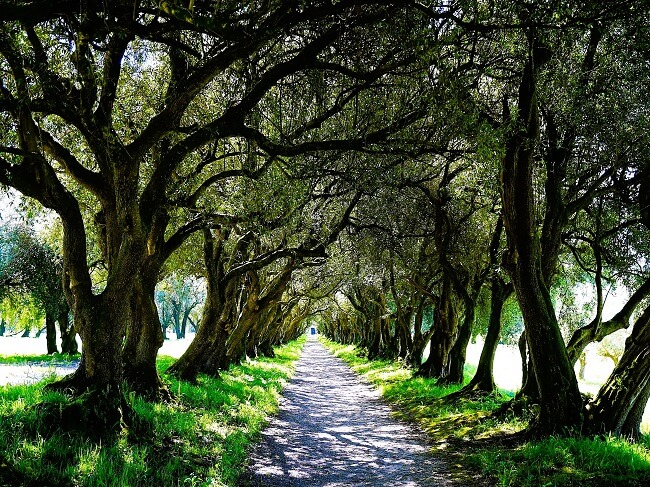
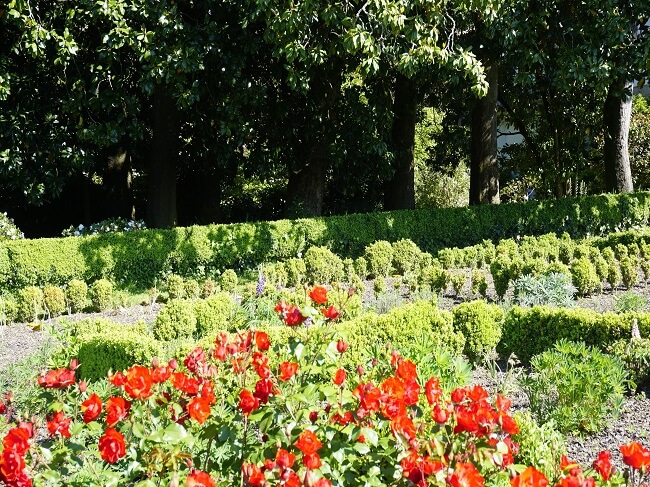
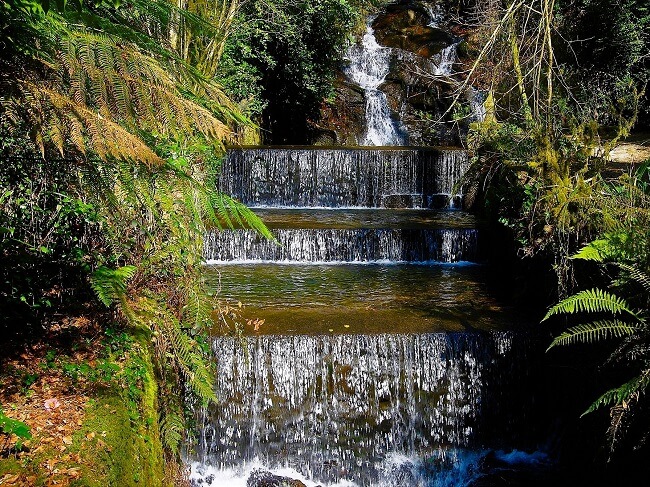
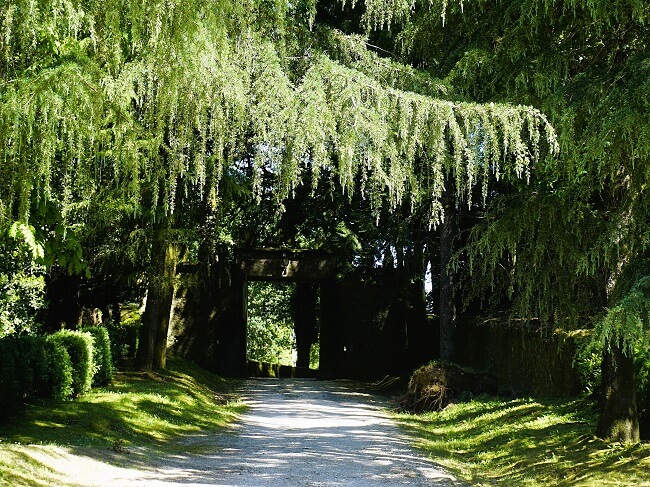
The olive tree garden, lined with long, shaded avenues, is regarded as one of the most creative ideas in Galicia. In 2015 it won the AEMO award for the best monumental olive garden in Spain.
Olives from oil producing trees (Granja de Ortigueira) were processed in a Roman style granite wheel mill and beam press, which have been in use until fairly recently.
Ulla wine was produced from grapes, red and white, and stored in barrels in the cellar in the traditional way.
A famous Baroque Compostelan architect built the unique “la Coca” (Galician name that is given to the winged dragon of mythology) fountain located in front of the main building.
There is also a nursery featuring a collection of several Camellias varieties.
From a botanical point of view, the important feature of this estate is its collection of monumental trees including Camellias, Olive trees, Boxwood, and giant magnolias.
Apart from the two palaces, there are many other pretty spots such as old bridges, lakes, plenty of old churches and loads of slopy paths here for hikes and walks.
We moved on to northern Portugal after three days in Vilar and headed to the picturesque Aveiro, the Portuguese canal city.
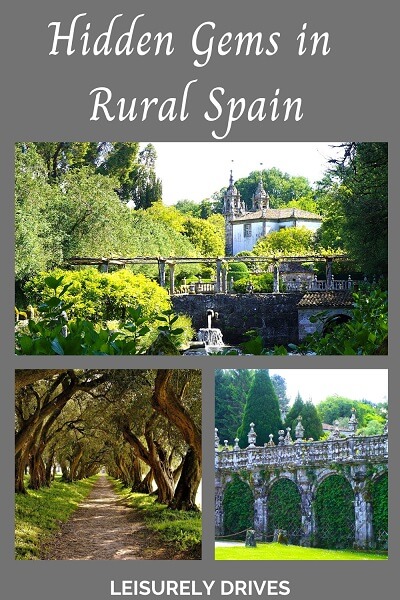
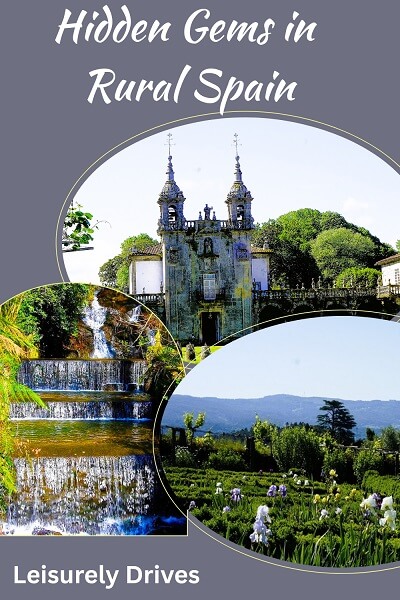


The olive tree walk looks very cool. Saving these for a future road trip through Northern Spain.
Such a beautiful read! Rural Spain truly feels like stepping into another world — slow, green, quiet, and full of surprises. Your stay in that little cottage sounds dreamy, and those hidden palaces are incredible. Pazo de Oca looks straight out of a fairytale, and the “Galician Versailles” nickname fits perfectly. I had no idea Galicia had estates with such grand gardens, channeled waterways, and historic architecture. Pazo de Santa Cruz de Rivadulla sounds just as fascinating — that olive tree walk and the unique boxwood tunnel must be amazing to photograph. Your whole experience makes me want to plan a slow countryside road trip through northern Spain!
I can’t get enough of Spain and the northern area is the only place I haven’t visited yet. When I head that way, I’ll be sure to check out these two places. The olive tree walk sounds like something I’d love to do.
Totally enjoyed reading your post, of parts of the Galicia region of Northern Spain. Shame about the WIFI, however the perfect opportunity to soak up the local history, wonderful food and equally wonderful people in this region
Northern Spain is so beautiful. The rural area looks perfect. It’s perfect for relaxation.
pazo de santa cruz de rivadulla must look amazing during spring. I would love to visit.
Spain is my new favorite place and this looks beautiful – and so peaceful! Saving it!
Wow, that looks amazing! How awesome to find such a hidden gym!
This area of Spain looks so peaceful and relaxing–I’m adding it to my list of dreamy destinations to visit someday!
What a lovely read! It is so refreshing to see Galicia’s quieter side highlighted so beautifully. I especially appreciated the description of the “Galician Versailles” at Pazo de Oca—the way you described the gravity-fed waterways and stone architecture makes it sound like a true hidden treasure.
The olive tree walk at Pazo de Santa Cruz de Rivadulla is definitely going on my travel bucket list now. Thank you for sharing these serene spots!
I really liked the way you focus on quieter, lesser-known places in Spain. It feels much more genuine than the usual tourist spots and matches how I like to travel. Thanks for sharing this.
It is so lush and green! Just looking at the photos alone feels so peaceful. I typically am immediately turned off by the phrase “hidden gem” just because it’s overused these days and gives me the AI ick, but this is truly a hidden gem and a great use of the phrase! Thank you for sharing.
How beautiful and unexpected. And an absolute festival of the colour GREEN. Loving it!
Amazing pictures!!! I am so tempted to feast my eyes on all the places. Lovely 🥰